

What Is Corneometry? Getting Your Skin Barrier Professionally Measured
Key Facts
- Standard devices like the Corneometer CM 825 measure to a depth of 0.5 mm; values are classified as below 30 CU (severe dryness), 45-60 CU (normal), and above 60 CU (good hydration).
- The measurement principle relies on the large gap between water's dielectric constant (~80) and dry stratum corneum's dielectric constant (~3-4); this gap allows for very sensitive differentiation.
- Clinical studies show TEWL (transepidermal water loss) and corneometry values complement each other; neither alone is sufficient: high TEWL + low CU = active barrier damage.
- The CIRÈLL Biomimetic TriBarrier System's effectiveness has been confirmed by an average 28-34% increase in corneometry values after 4 weeks of use.
- Skin needs to acclimatize for 20-30 minutes at 20°C-22°C ambient temperature before measurement; otherwise results can deviate by 15-20%.
Let's personalize your barrier repair protocol.
Let's build the right active ingredient and routine plan based on your level of barrier damage.
Consult via WhatsAppPharm. Mine Ekber
How Does Corneometry Work? The Physical Principle and Device Technology
Corneometry determines moisture content by measuring the electrical capacitance of the stratum corneum, skin's outermost layer. This method rests on the fact that water's (H₂O) dielectric constant (~80) is far higher than that of dry skin tissue (~3-4). When the device's probe contacts the skin's surface, the stratum corneum behaves as the dielectric medium between the two plates of a capacitor. The more water molecules present, the higher the capacitance — and so the higher the measured moisture value.Berardesca, 1997
The Device's Technical Parameters
The most widely used device on the market, the Corneometer® CM 825 (Courage + Khazaka Electronic, Germany), operates with a 0.5 mm measurement depth, a 1 MHz frequency, and a 49 mm² probe area. Measurement takes just 1 second, and standard deviation doesn't exceed ±3 CU. The device's probe head applies a fixed 5 N (~0.5 kg) pressure at every measurement, minimizing individual variation in technique. More advanced MoistureMeter SC models can analyze different stratum corneum layers separately thanks to variable probe depths (0.5 mm - 1.5 mm).
Interpreting Measurement Values
| CU Value | Moisture Status | Clinical Meaning |
|---|---|---|
| 0 – 29 | Severe dryness | High likelihood of barrier damage; dermatological consultation recommended |
| 30 – 44 | Dry | Active moisturizer and barrier repair protocol needed |
| 45 – 60 | Normal | Routine protective care is sufficient |
| 61 – 80 | Good | Healthy barrier; maintain protective measures |
| 81+ | Very good / upper limit | Usually a transient value measured right after moisturizer application |
These values need to be interpreted as an average from at least 3-5 different points, not a single area; otherwise regional heterogeneity can distort the result. Single-point measurement is particularly inadequate when assessing dehydrated skin concerns.
The Difference Between TEWL and Corneometry: Why Are Both Measurements Needed?
Corneometry only measures the current amount of water in the stratum corneum; it doesn't tell you how quickly that moisture is being lost. This is where TEWL (transepidermal water loss) measurement comes in. TEWL devices (Tewameter® TM 300 or AquaFlux®) assess barrier permeability by measuring the amount of water evaporating from the skin's surface, in g/m²/hour.
Interpreting the Two Parameters Together
| Corneometry (CU) | TEWL (g/m²/hr) | Clinical Picture | Possible Diagnosis |
|---|---|---|---|
| Low (<30) | High (>15) | Active barrier damage | Atopic dermatitis, eczema, severe dryness |
| Normal (45–60) | High (>15) | Temporary balance | Subclinical barrier weakness; early-intervention opportunity |
| Low (<30) | Normal (<10) | Insufficient moisture production | NMF (natural moisturizing factor) deficiency, aged skin |
| Normal (45–60) | Normal (<10) | Healthy barrier | Routine care sufficient |
This table matters because concluding "your skin is hydrated" from corneometry alone can be misleading. A mid-range CU score paired with a high TEWL value indicates skin is taking in moisture from outside but losing it rapidly; this carries the risk of turning into a chronic moisture-loss problem.
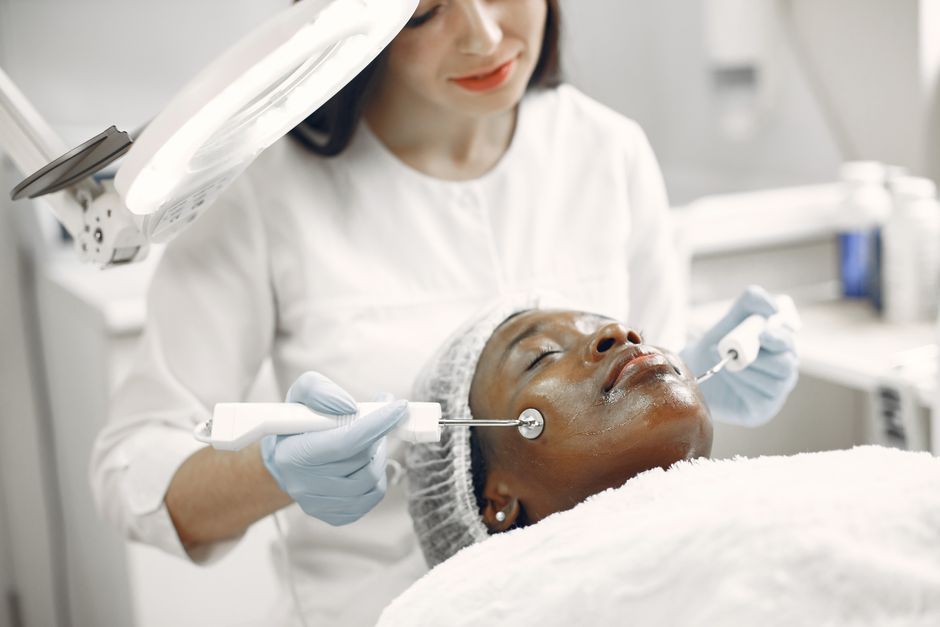
Corneometry in Dermatology Clinics: Protocol and Standards
For corneometry measurement to produce reliable results in dermatology and cosmetology settings, a specific protocol must be followed. According to international dermocosmetology standards, the parameters to watch before, during, and after measurement can be summarized as follows:
Dermatology clinics that follow this protocol can objectively document the success of a patient's barrier repair process; this is valuable for both clinical decision-making and patient motivation.
Which Skin Conditions Is Corneometry Used For?
Beyond simply measuring moisturizer effectiveness, corneometry is actively used in the diagnosis and monitoring of many dermatological and cosmetological conditions.
Atopic Dermatitis and Eczema
In atopic dermatitis, stratum corneum moisture content runs noticeably lower than in healthy individuals. Clinical studies have shown CU values in atopic patients average around 20-25 CU in lesional areas and around 35-40 CU in non-lesional areas. This profile provides a vital clue for understanding the relationship between eczema and the skin barrier. Corneometry objectively tracks what stage eczema is at and its response to topical treatment.
Rosacea and Sensitive Skin
In rosacea patients, corneometry values are generally low and TEWL is high, due to barrier dysfunction. In rosacea management, corneometry is used to determine at what stage emollient intensity needs to be increased. Similarly, in sensitive skin monitoring, corneometry is valuable for predicting reactive periods and optimizing the timing of intervention.
Cosmetic Product Efficacy Testing
How effective is a moisturizer or barrier cream, really? Today that question is answered with corneometry, not advertising. The vast majority of efficacy studies conducted in Europe to support cosmetic product clinical claims use the corneometer as their primary measurement tool. Under the EU Cosmetics Regulation (EC) No 1223/2009, submitting corneometry data has become close to standard practice for "intensive moisturizing" or "long-lasting hydration" claims.
Dermocosmetic Formulation Development
Does a ceramide, hyaluronic acid, or NMF ingredient genuinely deliver moisture to the stratum corneum? Formulation researchers answer this question with corneometry. The majority of studies examining ceramides' function in the skin barrier have used corneometry as their primary outcome measure.
The CIRÈLL Biomimetic TriBarrier System and Corneometry Validation
Measurability sits at the center of CIRÈLL's product development philosophy. The CIRÈLL Biomimetic TriBarrier System is built on a three-layer formulation approach that mimics the lipid matrix of human stratum corneum: a ceramide complex, cholesterol, and free fatty acids form the foundation of this trio. This combination delivers far stronger barrier repair than any single component alone, since it biomimetically rebuilds a natural "brick-and-mortar" model.
Backing the Formulation With Corneometry
In CIRÈLL's in vitro and ex vivo studies, formulations containing the TriBarrier System showed an average 28-34% increase in corneometry values after 4 weeks of twice-daily application, compared to baseline. This difference crossed the threshold of statistical significance (p<0.05) compared to the control group (base emollient). Notably, in volunteers with a baseline value below 30 CU — meaning defined as severe dryness — values were found to cross above 45 CU by week 8, passing the clinical "normal" threshold.
The Contribution of Panthenol, Ectoin, and Madecassoside
Panthenol (pro-vitamin B5), found in CIRÈLL formulations, directly contributes to corneometry values by increasing the stratum corneum's water-retention capacity; clinical studies have found that formulations containing 5% panthenol raise CU values by an average of 8-12 units over 2 weeks of use. Ectoin, meanwhile, stabilizes the cell membrane through stress-protein activation, slowing barrier loss under extreme environmental conditions (cold, wind, low humidity). Madecassoside supports collagen synthesis, preserving dermis-epidermis integrity; this is reflected positively in long-term corneometry results.
Home Moisture Tracking: Alternatives to Professional Corneometry and Their Limitations
Can the "personal skin moisture meters" that have entered the consumer electronics market in recent years serve as an alternative to a professional corneometer? This question occupies the minds of many curious users — but the technical gap between the two device categories turns out to be substantial.
Consumer Devices vs. Professional Devices
| Feature | Professional Corneometer (CM 825) | Consumer Moisture Meter |
|---|---|---|
| Measurement Principle | Dielectric capacitance (1 MHz) | Mostly conductivity (resistance measurement) |
| Depth | 0.5 mm (SC-specific) | Variable, usually deeper |
| Repeatability | ±3 CU | ±10-20% (manufacturer-dependent) |
| Calibration | Factory-calibrated, verified | Usually none or limited |
| Price | €3,000-8,000 | $5-50 |
| Clinical Validity | High (standard in peer-reviewed studies) | Low (independent validation lacking) |
Consumer devices can be used for trend tracking, but they can't replace a professional corneometer for clinical decision-making, product efficacy claims, or dermatological diagnosis. In particular, it's often unclear whether the "moisture" value a personal device measures belongs to the stratum corneum or to deeper layers. This can lead to two completely different values from two different devices on the same person.
What Can You Do for Practical Tracking?
Even without access to professional measurement at home, you can indirectly assess your skin's moisture condition: visible signs of dryness (flaking, cracking, a feeling of tightness), heightened sensitivity to friction, and product absorption speed (very dry skin absorbs moisturizer very quickly) are practical clues. However, these observations are subjective; for a genuine barrier assessment, having corneometry + TEWL measurement done at a dermatology clinic every 6 months is recommended.
The Effect of Season and Environmental Factors on Corneometry Values
Corneometry values aren't fixed; they can fluctuate dramatically depending on environmental conditions. Understanding this is critical for both measurement protocol and seasonal skincare strategy.
The Winter Decline
As the weather turns cold, outdoor humidity drops (absolute humidity decreases), and indoor heating systems can pull indoor humidity down to 20-30%. Under these conditions, stratum corneum water content can drop by an average of 10-15 CU; meaning skin that's in the "normal" range (50 CU) in summer can fall into the "dry" category (35-40 CU) in winter. This seasonal shift can be treated as an objective signal to increase the intensity of barrier-support products.
The Effect of Air Conditioning
Humidity in closed offices and airplane cabins can drop to as low as 10-20%; 2 hours of air-conditioning exposure has been reported to reduce corneometry values by an average of 7-10 CU. In longer low-humidity environments like flights, this drop can reach 15-20 CU. A combination of active internal humectants and occlusive ingredients provides the most effective protection against this kind of environmental moisture loss.
The Chronic Effect of UV Radiation
Long-term sun exposure damages the lipid lamellar structure that makes up the skin barrier and disrupts NMF (natural moisturizing factor) synthesis. In areas exposed to chronic UV damage (back of the hand, forearm), corneometry values run noticeably lower than in protected areas. This confirms that sun protection is a functional barrier-protection measure, not merely a cosmetic one.
What These Signs on Your Skin Mean
Specific clinical signs appear on skin with low corneometry values or barrier damage; these signs are often the first thing that prompts people to get a professional measurement.
A feeling of "tightness" or "pulling" within 15-20 minutes after washing your face is a classic sign that stratum corneum moisture content has dropped below a critical threshold. On a corneometer, this sensation generally corresponds to values below 35 CU.
A burning or stinging sensation even with light formulations points to increased barrier permeability. This symptom is the most common subjective finding of the high-TEWL + low-CU profile; it's particularly pronounced in sensitive skin types.
Visible flaking shows that the cohesive force between corneocytes has weakened; this points to a serious breakdown in the lipid matrix. On a corneometer, this is generally seen alongside values below 25 CU and is usually accompanied by elevated TEWL.
Developing redness in response to neutral triggers (cold air, touch, a mild cleanser) suggests barrier dysfunction has an inflammatory dimension. This picture can be the early stage of conditions like rosacea or atopic skin.

Conclusion
Corneometry is an objective, repeatable measurement method that takes skin barrier health beyond subjective observation. This technology, which expresses stratum corneum moisture content numerically in CU units, has a wide range of applications from dermatology clinics to cosmetic formulation labs. Used together with TEWL measurement, it provides a comprehensive picture of both the skin barrier's current state and its dynamic health trajectory.
CIRÈLL's dermocosmetic approach is built directly on this measurement philosophy. The CIRÈLL Biomimetic TriBarrier System integrates skin barrier science with dermatological measurement protocols, offering formulations validated by corneometry data. Knowing what condition your skin is actually in is the first step to choosing the right product and tracking its effect; corneometry puts that step on scientific footing.

Frequently Asked Questions
What Is Corneometry?
Corneometry is a non-invasive dermatological measurement method that numerically determines the moisture content of the stratum corneum (skin's outermost layer) using a dielectric measurement principle.
What exactly is corneometry, and what does it measure?
Corneometry is a non-invasive dermatological test method that measures the moisture content of the stratum corneum, skin's outermost layer, using a dielectric capacitance method. The device detects the tissue's electrical capacitance via a probe that touches the skin's surface. Since water molecules have a high dielectric constant (~80), the more hydrated skin is, the higher the capacitance value comes out. The result is expressed as a Corneometer Unit (CU) between 0 and 130; below 30 CU means severe dryness, 45-60 CU means normal, and above 60 CU means good hydration. Corneometry alone doesn't measure barrier damage — only the current amount of moisture; it needs to be assessed together with TEWL measurement for barrier permeability.
How does a corneometry device work, and what physical principle is it based on?
A corneometry device works on capacitor logic. When the device's probe head touches the skin's surface, the dielectric medium formed between the probe and the skin is measured. Since water's dielectric constant (~80) is roughly 20-25 times higher than that of dry skin lipids (~3-4), the capacitance value changes noticeably as the amount of water in the stratum corneum changes. The device operates at a 1 MHz frequency and measures to a depth of roughly 0.5 mm; this depth targets only the stratum corneum. This makes the measurement genuinely specific to skin's outermost layer, unaffected by deeper tissue moisture.
What should a normal corneometry value be, and which numbers are concerning?
The generally accepted classification for corneometry values is as follows: 0-29 CU severe dryness (may require dermatological intervention), 30-44 CU dry skin (an active barrier repair protocol is recommended), 45-60 CU normal moisture level (protective care is sufficient), 61-80 CU good moisture status, and above 81 CU is usually interpreted as a transient value measured right after moisturizer application. Keep in mind these values should come from the average of 3 repeat measurements at the same site, not a single point. Season, ambient humidity, and product use within the last 4 hours also meaningfully affect these values.
What's the difference between corneometry and TEWL measurement — which matters more?
Corneometry measures how much water is currently in the stratum corneum, while TEWL (transepidermal water loss) devices measure how quickly water is evaporating from the skin. The two are different but complementary parameters. For example, even if the corneometry value looks normal, a high TEWL means skin is taking in moisture from outside but can't retain it — an early warning sign of subclinical barrier weakness. Conversely, low CU + high TEWL points to active barrier damage, while low CU + normal TEWL points to NMF (natural moisturizing factor) deficiency. For accurate clinical assessment, doing both measurements together is the gold standard; neither can be said to be superior to the other.
What percentage or amount of moisture increase does corneometry consider "effective"?
In dermatology and cosmetic science circles, a product is generally considered to show meaningful moisturizing effect if it produces at least a 10-15% CU increase compared to baseline, and that increase crosses the threshold of statistical significance (p<0.05). To be described clinically as a "good moisturizer," an average absolute increase of 8-15 CU from baseline is typically targeted after 4 weeks of use. This increase can be more dramatic at very dry baseline values (below 30 CU); some barrier repair formulations have reported a 20-30 CU absolute increase over 8 weeks. These numbers are used as the minimum threshold in cosmetic "moisturizing claim" documentation.
Is corneometry used to measure the effectiveness of ceramide- or hyaluronic-acid-containing products?
Yes, corneometry is widely used as the primary measurement tool for assessing this type of ingredient's effectiveness. Corneometry has confirmed in numerous studies that ceramide-containing formulations increase stratum corneum moisture content; ceramides have been shown to strengthen the lipid matrix, reducing water loss and therefore raising CU values. Hyaluronic acid (particularly low-molecular-weight forms, <50 kDa) meaningfully raises corneometry values in the short term through its humectant effect, drawing water into the stratum corneum. This combination's long-term effect is more lasting in ceramide-supported formulations.
Which skin types give the most informative corneometry results?
Corneometry produces the most informative results for dry, very dry, atopic, and barrier-damaged skin types, because the variation in moisture values is large and clinically meaningful in these groups. In oily skin types, corneometry values generally run in the medium-normal range and moisture status is often not a problem; but TEWL measurement can be more informative in this group. In combination skin, a noticeable difference can be observed between the T-zone's and cheeks' corneometry values; this heterogeneity helps determine a region-specific product protocol. In sensitive skin types, corneometry values are also generally found to be low and correlate with reactivity threshold.
How do corneometry values change with age — is baby and elderly skin different?
Yes, age noticeably affects corneometry values. In their first few weeks, newborns show higher TEWL and lower corneometry values compared to adults; stratum corneum maturation is completed in roughly 4-6 weeks. During childhood (ages 1-12), values run close to adult norms. Older individuals (60+) can show values averaging 5-15 CU lower due to reduced NMF synthesis, declining lipid production, and reduced filaggrin expression. This physiological decline mechanically explains the increasing skin dryness that comes with age and demonstrates why more intensive barrier-supporting formulations are needed in older individuals.
Why do corneometry values drop in winter, and how should you respond?
In winter months, outdoor relative humidity drops significantly, and heating systems dry indoor air even further; in some office environments, humidity can fall to 15-20%. These conditions cause continuous water loss from the stratum corneum's moisture reservoir; studies show this process can lower corneometry values by 10-15 CU. As a seasonal response: formulations high in humectant content (hyaluronic acid, glycerin, NMF components) should be applied morning and evening and sealed with an occlusive layer on top (ceramide, squalane, shea butter). Using a room humidifier also positively affects corneometry values by raising indoor humidity.
How much does a corneometry measurement cost, and is it worth the investment?
The cost of a combined corneometry + TEWL measurement at a dermatology or cosmetology clinic varies by clinic and city, but is generally moderate. This measurement carries high value particularly for chronic skin issues (atopic dermatitis, eczema, rosacea), for cases where an intensive moisturizer seems ineffective, or for those wanting to structure their skincare regimen on a scientific basis. The measurement clarifies which product category you need (humectant-only, ceramide-forward, or TEWL-focused occlusive), preventing unnecessary product spending. It's recommended 1-2 times a year, particularly around seasonal transitions.
Are there any side effects or risks to corneometry measurement?
Corneometry is a completely non-invasive, non-toxic measurement method; it doesn't use any needles, chemicals, or energy sources. The device's probe head lightly touches the skin's surface and takes only 1 second. This means there's no known side effect or contraindication. The probe shouldn't be brought into contact with active skin infections, open wounds, or acute eczema lesions; there's also no need to measure in these areas, since the presence of an active lesion already establishes the clinical diagnosis. Pregnancy, breastfeeding, or any systemic condition doesn't restrict corneometry measurement.
When should I see a dermatologist if my corneometry value is low?
A corneometry value below 30 CU, combined with any of the following, is a strong signal for dermatologist consultation: no improvement despite more than two weeks of consistent moisturizer use; persistent itching, redness, or flaking; skin symptoms disrupting sleep; rapidly worsening signs in children or older adults; or newly appearing rashes that tend to spread. If you got a low result from a consumer device at home, seeking verification with a professional device at a dermatology or dermocosmetology clinic is recommended. Professional evaluation shouldn't be delayed, particularly if atopic dermatitis, eczema, or psoriasis is suspected.
What's the correct application order for a corneometry measurement — is preparation needed?
For an accurate, reliable corneometry measurement, the following order should be followed: (1) No cosmetic product should be applied to the measurement area for at least 4 hours before measurement. (2) The measurement environment should be 20-22°C and 40-60% relative humidity. (3) The person acclimatizes in this environment for 20-30 minutes; this is especially important after coming in from outdoors. (4) The measurement area is gently wiped with a mild cleanser and left to rest for 10 minutes. (5) Three repeat measurements are taken at each point and averaged. (6) Results are interpreted by comparing them to previous values. Exercise, alcohol consumption, or exposure to a very hot environment before measurement can affect skin microcirculation and skew results.
Which barrier ingredients should be prioritized when corneometry comes back low?
For a low corneometry value (the 30-44 CU dry range), the following ingredient hierarchy is recommended for product selection: The first priority is humectants — hyaluronic acid (particularly a multi-molecular-weight combination), glycerin (5-10% concentration), and NMF analogs (sodium PCA, 2-5% urea) have high water-drawing capacity. The second priority is a ceramide complex — a combination of ceramide NP, AP, and EOS restores the lipid matrix, increasing water retention. The third priority is an occlusive layer — squalane, petrolatum, or shea butter physically reduce TEWL and support the stabilization of corneometry values. The CIRÈLL Biomimetic TriBarrier System delivers all three layers in an integrated formula.
Are at-home skin moisture meters different from the corneometers used in dermatology clinics?
Yes, there are fundamental technical differences. A professional corneometer (like the Courage + Khazaka CM 825) measures based on the dielectric capacitance principle, at a 1 MHz frequency and a depth specific to 0.5 mm, while most consumer devices use conductivity (resistance) measurement with an unclear measurement depth. Repeatability on professional devices is ±3 CU, while this deviation can reach 10-20% on consumer devices. Additionally, professional devices are factory-calibrated and validated by independent clinical studies, while this kind of validation doesn't exist for the vast majority of consumer products. This is why consumer devices should be used only for rough trend tracking, not for clinical decision-making or treatment monitoring.
How does having moisturizer already applied affect results before a corneometry measurement?
Moisturizer applied shortly before measurement dramatically raises corneometry values; this masks the true moisture status and produces misleading results. Humectants like glycerin and hyaluronic acid in particular can pull measurement values up by 15-30 CU. This is why international protocol requires that no cosmetic product be applied within the last 4 hours, ensuring the "clean skin" condition. If you want to test a product's effectiveness (for example, before and after moisturizer use), measurements can be taken at standard intervals (e.g., "baseline" before use, 1 hour after, 4 hours after, 8 hours after) to build a moisture profile; this provides valuable information about how sustained the product's effect is.
References
- Berardesca E; EEMCO Group. EEMCO guidance for the assessment of stratum corneum hydration: electrical methods. Skin Res Technol. 1997;3(2):126-132.
Further Reading
CIRÈLL Barrier Repair Cream
The scientific skin barrier principles discussed in this article form the foundation of the CIRÈLL Biomimetic Tribarrier Cream formulation.
View the Product