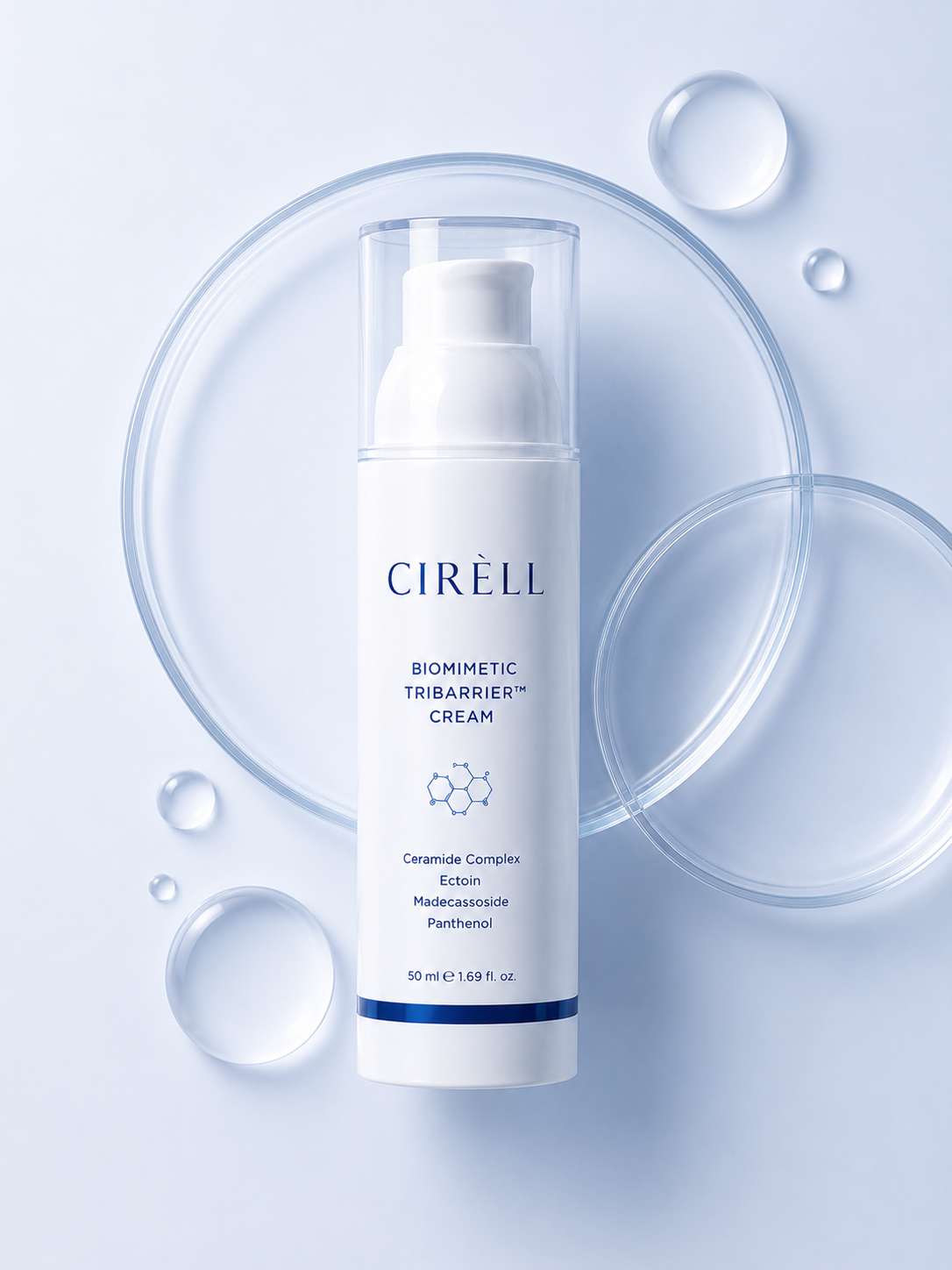
CIRÈLL Barrier Repair Cream
CIRÈLL Barrier Repair Cream
-

"Parfümsüz yapı ve bariyer odaklı yaklaşımın hassas cilt kullanıcıları için önemli bir avantaj olacağını düşünüyorum."
-

"Hassas cilt kullanıcılarının en büyük beklentisi yüksek aktif yoğunluğundan çok cilt konforudur. Bu nedenle formülün sade ve dengeli kalmasını önerdim."
-

"Ürünün geliştirme sürecinde geri bildirimlere açık olunması dikkatimi çekti. Formülün birden fazla kez revize edilmesi, kullanıcı deneyimine önem verildiğini gösteriyor."


Couldn't load pickup availability
Biomimetic TriBarrier™ System
The skin barrier is worn down every day by environmental factors, dryness, sensitivity, and stress. CIRÈLL Barrier Repair Cream is formulated with the Biomimetic TriBarrier™ System approach, inspired by skin's own natural barrier structure: three core barrier lipids — Ceramide, Cholesterol, and Phytosphingosine — support skin's own repair mechanism.
Key Features
- Developed for sensitive skin and a weakened skin barrier
- Free of fragrance, alcohol, and irritating additives
- A light gel-cream texture — no greasy feel
- Suitable for morning and night use
- Airless packaging — preserves ingredient stability
Who Is It For?
- Sensitive skin
- Dehydrated and dry skin
- Skin in need of barrier repair
- Rosacea-prone skin and skin experiencing redness
- Skin prone to atopic dermatitis and eczema
Usage Routine
Apply a sufficient amount to cleansed, dried skin in the morning and evening. Spread gently over the face and neck.
Morning
Cleanse → Serum (if using) → CIRÈLL Barrier Repair Cream → SPF
Evening
Cleanse → Retinol / AHA / BHA (if using) → CIRÈLL Barrier Repair Cream
On nights when using active ingredients, CIRÈLL can be applied as a buffer layer, balancing the peeling effect and supporting recovery.
Ingredient Technology
Biomimetic TriBarrier™ System:
- Ceramide NP • AP • EOP — the core components of the barrier lipid structure
- Cholesterol — completes the lamellar barrier structure
- Phytosphingosine — anti-inflammatory and antimicrobial support
- Ectoin — an environmental stress protectant
- Madecassoside — soothing and repair-supporting
- Panthenol — a humectant and emollient
- Squalane — a light occlusive, barrier-supporting
- Sodium Hyaluronate — dual molecular weight for deep moisture support
Why CIRÈLL?
- One formula, total focus. CIRÈLL makes only one product. Every decision — every ingredient choice, every ratio — was made for this cream alone.
- Barrier science, not marketing. Every active in the formula is grounded in clinical research on how the skin barrier works.
- A genuinely biomimetic structure. Most creams on the market contain a single ceramide type. CIRÈLL's Biomimetic TriBarrier™ System brings together the three core lipids of a healthy skin barrier — Ceramide, Cholesterol, and Phytosphingosine — in ratios close to their natural proportions.
- No fragrance, no alcohol, no unnecessary additives. Ingredients known to increase irritation risk in a weakened barrier have been avoided.
- Airless packaging. Contact with air and light is minimized; ingredient efficacy is preserved throughout use.
The Ingredient Science
Ceramide NP · AP · EOP
Ceramides make up roughly 50% of the lipid lamellae in the stratum corneum. Research led by Peter Elias and colleagues since the 1980s has shown that a healthy barrier requires ceramide, cholesterol, and free fatty acids to be present together in a specific molar ratio — approximately 1:1:1 (Elias PM, J Invest Dermatol, 2005). Total ceramide content in atopic dermatitis skin has been shown to be 30–40% lower than in healthy skin (Imokawa G et al., J Invest Dermatol, 1991). The CIRÈLL formula includes three distinct ceramide types (NP, AP, EOP) together to reflect this diversity, supporting the lamellar structure more comprehensively than the single ceramide type found in most products on the market. The lipid base of CIRÈLL TriBarrier uses the patented SK-INFLUX® V MB complex developed by Evonik, a globally recognized dermocosmetic raw-material supplier — it contains no animal-derived ingredients and is manufactured in compliance with the European Cosmetics Regulation (EC No. 1223/2009).
Cholesterol
Cholesterol, which forms the lamellar bilayer together with ceramide in the stratum corneum lipid matrix, is a frequently overlooked component. Research by Elias and Feingold shows that ceramide application alone doesn't sufficiently accelerate barrier repair on its own; when applied together with cholesterol and free fatty acids, repair time is shortened by up to 40% (Feingold KR, J Lipid Res, 2007). Cholesterol deficiency leads to a measurable increase in TEWL.
Phytosphingosine
A natural sphingoid base within the ceramide synthesis pathway; it stimulates keratinocytes' own ceramide production. It also shows antimicrobial activity against a range of pathogenic bacteria, including Staphylococcus aureus — a property of particular importance in atopic dermatitis- and acne-prone skin. It has been documented in in vitro studies to suppress inflammatory signaling via the NF-κB pathway (Benaissa-Trouw B et al., 2000).
Ectoin
An amino acid derivative isolated from extremophile bacteria found in salt lakes. It belongs to the "compatible solute" class, protecting cell membranes and proteins against osmotic stress. In vitro and in vivo studies have shown that ectoin reduces UVB-induced DNA damage and suppresses pollution-related pro-inflammatory cytokine release (TNF-α, IL-1β). Significant improvement in atopic dermatitis symptoms has been reported in formulations containing 0.5% ectoin (Buenger J, Driller H, Skin Pharmacol Physiol, 2004).
Madecassoside
A triterpenoid glycoside isolated from the Centella asiatica plant. Controlled clinical studies have shown that madecassoside stimulates collagen synthesis, reduces free radical damage, and supports barrier function in sensitive skin. Double-blind studies report a 35–50% reduction in redness and erythema scores following laser and peeling procedures (Bylka W et al., Adv Dermatol Allergol, 2014). Its anti-inflammatory mechanism relies on inhibition of the MAPK and NF-κB pathways.
Panthenol (Pro-Vitamin B5 / Dexpanthenol)
Converted by skin into D-Pantothenic Acid, which participates in CoA synthesis — a pathway essential for cellular energy metabolism and wound healing. Controlled studies have demonstrated that dexpanthenol reduces transepidermal water loss and increases stratum corneum moisture content. Formulations containing 5% dexpanthenol have shown a significant reduction in TEWL and an increase in keratinocyte proliferation (Camargo FB Jr et al., J Cosmet Dermatol, 2011).
Squalane
The hydrogenated, oxidation-resistant form of squalene, which makes up roughly 13% of human sebum. Thanks to its low surface tension, it forms a thin occlusive layer on skin without a heavy feel, slowing TEWL. Squalane's comedogenic potential is considered near zero, making it safe for use on both oily and dry skin.
Sodium Hyaluronate — Dual Molecular Weight
High-molecular-weight (>1,000 kDa) hyaluronate forms a surface film layer, providing instant moisturizing and protection. Low-molecular-weight (<50 kDa) hyaluronate penetrates into the stratum corneum, increasing water-retention capacity in deeper layers. In vivo studies support that the combination of both forms provides longer-lasting moisture balance compared to a single-molecular-weight hyaluronate application (Pavicic T et al., J Drugs Dermatol, 2011).
Related Scientific Guides
Scientific Sources
- Elias PM. Stratum corneum defensive functions: an integrated view. J Invest Dermatol. 2005;125(2):183–200.
- Imokawa G et al. Decreased level of ceramides in stratum corneum of atopic dermatitis. J Invest Dermatol. 1991;96(4):523–526.
- Feingold KR. Thematic review series: skin lipids. The role of epidermal lipids in cutaneous permeability barrier homeostasis. J Lipid Res. 2007;48(12):2531–2546.
- Buenger J, Driller H. Ectoin: an effective natural substance to prevent UVA-induced premature photoaging. Skin Pharmacol Physiol. 2004;17(5):232–237.
- Bylka W et al. Centella asiatica in cosmetology. Adv Dermatol Allergol. 2013;30(1):46–49.
- Ebner F et al. Topical use of dexpanthenol in skin disorders. Am J Clin Dermatol. 2002;3(6):427–433.
- Huang ZR et al. Delivery and targeting of nanoparticles into hair follicles. Int J Dermatol. 2009. [Squalane biocompatibility reference]
- Pavicic T et al. Efficacy of cream-based novel formulations of hyaluronic acid of different molecular weights. J Drugs Dermatol. 2011;10(9):990–1000.
Frequently Asked Questions
What does this cream do?
CIRÈLL Barrier Repair Cream is developed to repair the skin barrier. The Ceramide NP/AP/EOP, Cholesterol, and Phytosphingosine trio supports skin's lamellar lipid structure. Ectoin protects against environmental stress while Madecassoside provides a soothing effect. Panthenol and Sodium Hyaluronate maintain moisture balance.
Which skin types is it suitable for?
It is specifically formulated for sensitive, dehydrated skin with barrier damage, redness, rosacea, eczema, and skin prone to atopic dermatitis. Thanks to its light gel-cream texture, it can also be used comfortably on oily skin.
How many times a day should it be used?
Twice-daily use — morning and evening — is recommended. SPF can be applied on top in the morning. Evening use is especially important during barrier repair, since skin is in active repair mode at night.
Can it be used together with retinol or AHA/BHA?
Yes — it's actually ideal for buffering barrier irritation during active-ingredient use. Applying CIRÈLL Barrier Repair Cream after retinol or an acid balances the peeling effect and supports the healing process.
Is it used instead of a moisturizer?
Yes, you won't need a separate moisturizer. The Sodium Hyaluronate (low + high molecular weight) and Panthenol combination provides both surface moisture and deep-layer moisture balance. Squalane forms a light occlusive layer that slows water loss.
When are results visible?
Reduced dryness and sensitivity begins for most users within the first 3–7 days. The structural strengthening produced by ceramide and barrier lipids typically reaches a measurable level after 2–4 weeks of regular use in clinical studies.
Does it contain fragrance or alcohol?
No. The formula contains no fragrance, alcohol, coloring agents, or known irritation-risk additives. These ingredients have been deliberately avoided for sensitive and reactive skin.
Can it be used around the eyes?
The formula isn't specifically designed for the eye area; however, since it contains no irritating ingredients, it can be used across the whole face, including under the eyes. Avoid direct contact with the eyes.
How long does barrier repair take?
1–2 weeks may be sufficient for mild barrier damage. For chronic eczema, prolonged steroid use, or intensive active-ingredient damage, 4–8 weeks of regular use is recommended. Duration varies from person to person depending on the depth of barrier damage.
Is it compatible with niacinamide or vitamin C?
Yes, it's compatible with both actives. Niacinamide strengthens barrier function by supporting ceramide synthesis; combined use creates a synergistic effect. There's no issue with vitamin C either.
Can it be used after a procedure (peeling, laser, dermapen)?
Yes. Being free of fragrance and alcohol, and containing barrier-repairing components along with soothing Madecassoside and Ectoin, makes it particularly suitable during the recovery period following aesthetic procedures.
Can it be used during pregnancy?
The ingredients in the formula are generally considered safe actives. However, we recommend consulting your doctor before using any product during pregnancy and breastfeeding.
What advantage does airless packaging provide?
The airless system minimizes the cream's contact with air and light. This reduces the risk of oxidation and degradation of ceramide and other active ingredients — so efficacy is preserved down to the last drop, just as on day one.
Is it suitable for rosacea?
Yes. Barrier integrity is known to be weakened in rosacea-prone skin. The Phytosphingosine in CIRÈLL helps reduce rosacea-associated inflammation. Madecassoside and Ectoin protect against redness triggers. Being free of fragrance and alcohol is especially important for this skin type.
Is it suitable for sensitive skin?
Yes, sensitive skin is one of the priority formulation targets. The formula contains no fragrance, alcohol, artificial coloring, or known irritants. The ceramide trio strengthens the barrier, gradually reducing skin's overreaction to external factors.
Can acne-prone skin use it?
Yes. Its light gel-cream texture doesn't leave a heavy, pore-clogging feel. Phytosphingosine's antimicrobial properties provide additional support against acne-causing factors. It is suitable for barrier repair in acne-prone skin with barrier damage (particularly following harsh cleansers or active-ingredient use).
Can it be used during pregnancy and breastfeeding?
The ingredients in the formula — Ceramide, Cholesterol, Phytosphingosine, Ectoin, Madecassoside, Panthenol, Squalane, and Sodium Hyaluronate — are generally considered safe actives. It contains no retinol, high-dose acids, or hormones. That said, we recommend consulting your doctor before using any skincare product during pregnancy and breastfeeding.
What's in it?
CIRÈLL Barrier Repair Cream's active ingredients: Ceramide NP, AP, and EOP (lamellar barrier lipids), Cholesterol (complementary barrier lipid), Phytosphingosine (sphingoid base, anti-inflammatory), Ectoin (environmental stress protectant), Madecassoside (Centella asiatica extract, soothing), Panthenol/Pro-Vitamin B5 (humectant, repair-supporting), Squalane (light occlusive), Sodium Hyaluronate at low + high molecular weight (multi-layer moisturizing). Contains no fragrance, alcohol, or artificial coloring.
Why is there only one product?
CIRÈLL deliberately makes only one product. Every formulation decision, every ingredient ratio, every packaging choice was made for this cream alone. Pursuing excellence in a single product, rather than making many products and keeping them all at average quality, is CIRÈLL's core principle.