

Body Skin and Barrier Care: Different Needs from the Face
Key Facts
- The stratum corneum on the legs lacks sebaceous gland support; TEWL risk is high.
- Xerosis (excessively dry body skin) affects 75% of the population aged 60+.
- A 5% urea-containing lotion improved body xerosis score by 52% over 4 weeks.
- Applying a ceramide lotion within 3 minutes of bathing/showering doubles moisture-retention capacity.
- A body ceramide lotion covers 5-10 times more surface area than a face cream — cost efficiency is critical.
Let's strengthen your body's skin barrier
Let's evaluate your body care needs, which differ from your face's.
Free Consultation LinePharm. Mine Ekber
How the Body Barrier Differs from the Face
Face: high sebaceous gland density, frequent cleansing, active skincare. Body: low sebaceous gland activity (especially on the legs/arms), less frequent washing, essentially zero active care for most people. This imbalance leads to the body's surface area being neglected, with xerosis, itching, roughness, and barrier damage accumulating far faster than on the face.
The Golden Window After Bathing
The first 3 minutes after a shower or bath are the most critical window for applying a ceramide lotion. A moisturizer applied immediately to damp skin (damp-skin application) retains noticeably more moisture than one applied to dry skin. This "3-minute rule" is the simplest and most effective principle in body barrier care.
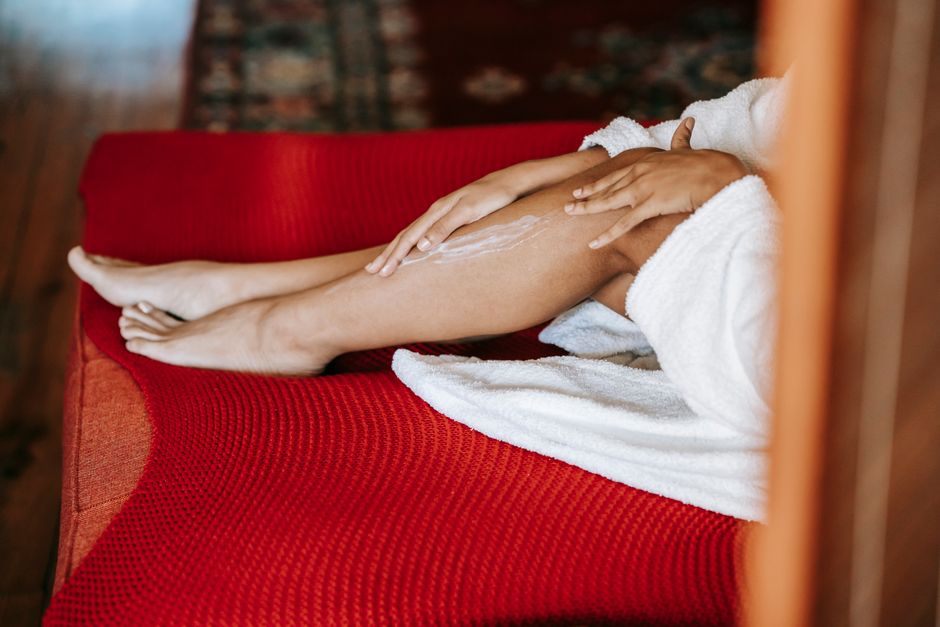
Managing Xerosis: Urea and Ceramide
Urea is both a humectant and keratolytic; at 5% concentration it draws in moisture, at 10%+ it dissolves abnormal keratinization. A ceramide lotion combined with urea is highly effective: urea draws in and holds water, ceramide repairs the lipid barrier. 75% of winter itch cases show significant improvement within 4 weeks with a ceramide + 5% urea lotion.Chamlin et al., 2002
Choosing a Shower Product for Body Care
Bar soaps create a pH problem for the body too; a pH-balanced liquid body wash should be preferred. Seeking heavy lather can create an SLS dependency habit — less foam means less barrier stress. In bath soaking, colloidal oatmeal or milk bath products help during atopic flares. The rule of warm showers, not hot ones, applies to the body too.
Priority Areas on the Body Barrier
Calves and ankles: the driest and itchiest areas — focus here first. Backs of hands and wrists: particularly under attack due to frequent washing. Elbows and knees: prone to keratin buildup; a 10% urea cream helps. Neck and décolletage: sun damage accumulates here; should be included in the same SPF coverage as the face.
What Do These Signs Mean for You?
Science explains how skin works — but you probably arrived on this page with a specific question. Here are the most common signs matched with the reason behind them:
A lipid-deficient barrier increases water loss overnight; the tightness you first feel in the morning is a reflection of this rise in TEWL.
When ceramide is deficient, the barrier's water-retention capacity drops; water keeps evaporating instead of staying held in the skin.van Smeden et al., 2014
A damaged barrier becomes overly sensitive to the surfactants in cleansing products.
When barrier integrity is compromised, the stratum corneum surface becomes uneven; makeup won't hold and flaking begins.
Strengthening the Body's Skin Barrier with Seasonal Care
The Body Barrier in Winter: More Vulnerable Than the Face
Compared to facial skin, body skin contains fewer sebaceous glands; this makes the body's natural moisture barrier less effective when care products aren't applied. In winter, low indoor humidity from heating and AC combined with cold outdoor air breaks down the body barrier faster than the face's. The legs and arms are particularly prone to xerosis (pathological dryness); TEWL values in these areas stay markedly elevated throughout winter.
Bathing frequency and temperature also have a critical effect on the body barrier: hot water dissolves the surface lipid film and disrupts the acid mantle. A daily long hot shower damages the body barrier every day without a deliberate strategy. Warm water (37-38°C), a short shower duration (5-7 minutes), and applying moisturizer within 3 minutes after showering form the most effective lifestyle combination for body barrier health.
The Ceramide and Urea Combination for Body Skin
Urea can be safely used at higher concentrations on body skin (particularly the legs, elbows, heels) than on facial skin: body lotions containing 10-20% urea soften keratinized areas and show an NMF-like humectant effect. In combination with ceramide — urea moisturizes, ceramide locks it in — this creates an ideal protocol that closes both of the body barrier's core gaps at once. This combination is also recommended by clinicians specifically for diabetic peripheral neuropathy, psoriasis, and atopic-prone leg skin.
"CIRÈLL's approach to body care is built on extending the barrier science used on the face to the entire body. Stratum corneum physiology is fundamentally the same across every part of the body, which is why the ceramide-based barrier repair principle should be applied not just to the face, but to all skin."
Conclusion
Body skin has the same fundamental barrier as facial skin, but carries important anatomical differences: sebaceous gland density is much lower (particularly on the arms and legs), surface area is far larger, and for most people it's almost entirely left out of the skincare routine. This neglect leads to serious barrier problems in the calves and legs — the areas where xerosis (excessive dryness), winter itch,Elias, 2005 and atopic dermatitis flares are most commonly seen.
CIRÈLL's Biomimetic TriBarrier formulation is built on this scientific foundation: it combines ceramide NP, AP, and EOP at natural molar ratios to target durable, measurable barrier repair.

Frequently Asked Questions
Can I use my face cream on my body too?
Yes, but it's not cost-effective. A large-volume body ceramide lotion is more economical.
Is SPF necessary for the body's skin barrier?
Yes, for sun-exposed areas (arms, legs, neck, décolletage). SPF on the entire body isn't practical, but exposed areas should be protected.
Is a urea-containing product suitable for aging skin?
Yes. For xerosis and winter itch, 5-10% urea is one of the most effective actives; it's safe across all age groups.
Can body ceramide lotion be used on the face?
In most cases, yes. However, body products may be less tested than facial products; a patch test is recommended before first use.
Does the body barrier repair faster than the face?
It's different. Since sebaceous gland support is lower, repair depends more heavily on topical ceramide load.
Which product should older patients prioritize for the body barrier?
A ceramide + 5-10% urea lotion, available over the counter if well tolerated. Applying an occlusive cream or lotion before bed with a light cotton sock/glove technique is effective for winter xerosis.
What's the most common habit that damages the body barrier?
The combination of a hot, long shower + a foaming soap + drying off and skipping moisturizer. This trio is the primary driver of winter xerosis.
Should I choose lotion or cream?
Dry skin and winter: cream or a heavy lotion. Oily/combination body skin and summer: a light lotion. Very dry areas (elbows, heels): a heavy cream or a 10% urea balm.
CIRÈLL Perspective: Safe Formulation for Sensitive and Reactive Skin
The Scientific Perspective
CIRÈLL offers barrier-supporting formulations designed to be used alongside a dermatologist's recommendation for skin with a dermatological condition, free of fragrance and irritant ingredients. Its safety profile is backed by clinical evidence.

Mine Ekber
CIRÈLL Formulation & Content Team
Content editor working alongside CIRÈLL's R&D team on skin barrier physiology. The scientific claims on this page are backed by peer-reviewed sources verified on PubMed/NCBI; the source list appears below.
Scientific Sources
- van Smeden J, Janssens M, Gooris GS, Bouwstra JA. The important role of stratum corneum lipids for the cutaneous barrier function. Exp Dermatol, 2014.
- Elias PM. Stratum corneum defensive functions: an integrated view. J Invest Dermatol, 2005.
- Chamlin SL, Kao J, Frieden IJ, et al. Ceramide-dominant barrier repair lipids alleviate childhood atopic dermatitis: changes in barrier function provide a sensitive indicator of disease activity. J Am Acad Dermatol, 2002.
Related Blog Posts
Related Guides
CIRÈLL Barrier Repair Cream
The scientific skin barrier principles discussed in this article form the foundation of the CIRÈLL Biomimetic Tribarrier Cream formulation.
View the Product