
Are NAD+ Supplements/Creams Actually Effective for Skin?
Key Facts
- In a study of 120 healthy adults aged 60-80, the group taking an NR+pterostilbine (NAD+ precursor) combination for 8 weeks saw blood NAD+ levels rise by roughly 40% at the standard dose and roughly 90% at double dose.Dellinger et al., 2017
- A recent review states that oral NMN supplementation safely raises NAD+ levels in humans, but that skin-specific clinical outcomes (wrinkles, elasticity) remain limited.Song et al., 2023
- In a Phase 3 trial of 386 people taking oral nicotinamide (an NAD+ precursor), a dose of 2x500 mg daily was shown to significantly reduce the formation of precancerous skin lesions.Chen et al., 2015
- Strong human-subject clinical data on topical/pure NAD+ creams' effect on skin has not yet been published; the positive results available so far are at the in vitro (cell culture) level.Kang et al., 2024
- Side effects reported for oral NAD+ precursor supplements are generally mild (mild nausea, headache); no serious adverse effects have been reported.Dellinger et al., 2017
Have a clinical question?
Consult directly with our pharmacist.
Consult via WhatsAppPharm. Mine Ekber
What Does the Evidence Say?
Short answer: oral NAD+ precursor supplements (NR, NMN, nicotinamide) have been reliably shown to raise blood NAD+ levels; but human data showing that this rise translates into a measurable difference in skin appearance (wrinkles, elasticity, radiance) is still limited. The picture is even earlier-stage for topical NAD+ creams. Looking more closely, in a randomized, double-blind, placebo-controlled study of 120 healthy adults, daily intake of an NR and pterostilbine combination over 8 weeks raised blood NAD+ levels by roughly 40% at the standard dose and roughly 90% at double dose, with the increase sustained throughout the study.Dellinger et al., 2017 That gives a clear yes to "does supplementation raise NAD+ levels." But "does raised NAD+ visibly rejuvenate skin" is a different question, and the evidence for that second question is much weaker. Practical takeaway: a direct, proven line between raising blood NAD+ levels and improving skin appearance has not yet been drawn.
What Do Oral Supplements Show?
NAD+ Levels Rise, But the Skin Outcome Isn't Clear
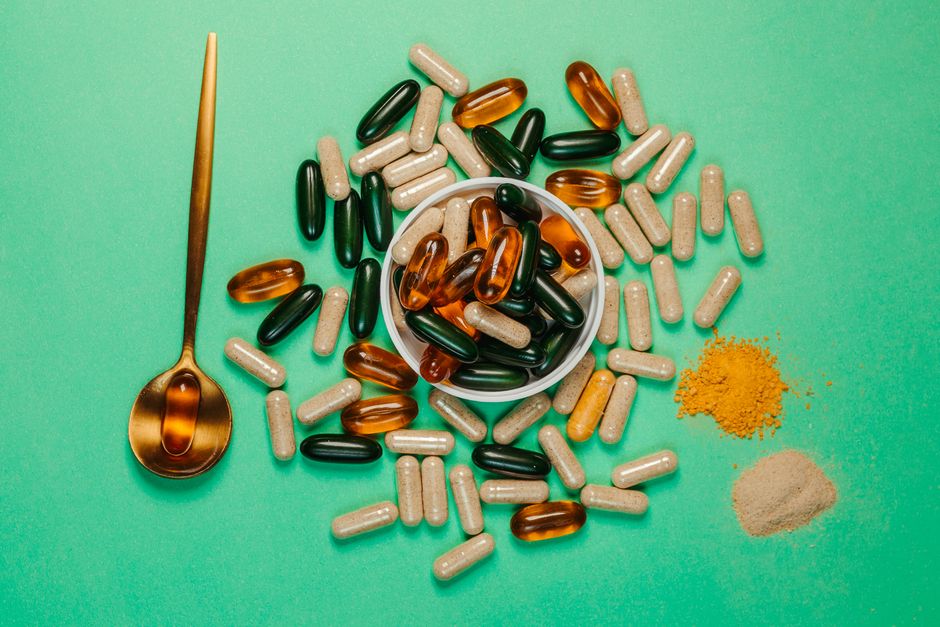
A recent review collectively assessed human NMN studies and found that while NMN safely raises NAD+ levels, skin-specific clinical outcomes such as reduced wrinkles or increased elasticity were either not measured at all in these studies or remained limited.Song et al., 2023 This shows that most current NAD+ supplement research isn't primarily focused on skin at all — it's focused on metabolic health, muscle function, and general aging markers. The lack of a well-designed, skin-specific, placebo-controlled clinical trial is the biggest gap in this field.
The Strongest "Skin" Evidence Actually Comes from Niacinamide
Interestingly, among NAD+ precursors, the one with the most concrete clinical skin benefit is nicotinamide (niacinamide) — the "oldest" and simplest precursor of them all. In a randomized Phase 3 trial of 386 people, the group taking 500 mg of oral nicotinamide twice daily showed a significant reduction in new actinic keratosis (precancerous skin lesion) formation compared to placebo.Chen et al., 2015 This finding has also been confirmed in similarly high-skin-cancer-risk, immunosuppressed groups such as transplant recipients. While these studies tested nicotinamide itself rather than NAD+, they represent the most concrete human evidence for the idea that "the NAD+ pathway may benefit skin." We cover this in more depth in our article on niacinamide's role in the skin barrier.
Topical NAD+ Creams: Where Do We Stand?
Lab Results Are Promising, Human Data Is Missing
The picture is different for topical (skin-applied) pure NAD+ formulations. A study published in 2024 showed that when human fibroblasts were supplied with external NAD+ — particularly combined with CD38-inhibiting plant compounds (quercetin, enoxolone) — cell viability increased, senescence markers decreased, and UV-induced DNA damage was limited.Kang et al., 2024 But this study was entirely at the cell culture (in vitro) level; whether an NAD+ cream applied to human skin would produce a similar result in real clinical conditions has not been tested. The size of the NAD+ molecule also raises the open question of whether it can cross an intact skin barrier to reach living cells at all.

How Should You Interpret the Results?
If you're considering an NAD+ supplement or cream, it's important to separate three distinct claims: (1) "NAD+ precursors raise blood NAD+ levels" — supported by strong evidence; (2) "Oral nicotinamide may reduce skin cancer risk" — supported by Phase 3 evidence in specific, high-risk groups; (3) "Topical NAD+ cream rejuvenates skin" — currently mostly a marketing claim, not yet confirmed by human clinical data. Conflating these three can lead to unrealistic expectations.
Conclusion
Oral NAD+ precursor supplements safely raise blood NAD+ levels, and the nicotinamide form specifically has shown a reduction in skin cancer risk; but the claim that "NAD+ cream rejuvenates skin" currently rests more on lab findings and marketing than on human data.
"CIRÈLL makes it a principle not to overstate claims that haven't yet been confirmed in human skin, and instead to share the level of evidence transparently."
Frequently Asked Questions
Are NAD+ Supplements/Creams Actually Effective for Skin?
Partly: NAD+ supplements produce a measurable increase in blood levels (40-90% with NR/NMN), but human data proving topical creams' effect on skin hasn't been published yet.
Do NAD+ supplements really raise blood NAD+ levels?
Yes, studies using precursors like NR and NMN have shown blood NAD+ level increases in the 40-90% range.
Does NAD+ supplementation rejuvenate skin?
Strong human clinical data for this specific claim doesn't exist yet; the evidence available is mostly focused on general health and metabolism.
Which NAD+ precursor has the strongest evidence for skin?
Surprisingly, it's nicotinamide (niacinamide), the oldest precursor; a Phase 3 study showed it reduced precancerous skin lesions.
Do topical NAD+ creams work?
The positive findings available so far are at the cell culture (in vitro) level; confirmed human clinical data has not yet been published.
Do NAD+ supplements have side effects?
Side effects reported in studies are generally mild (such as mild nausea or headache); no serious adverse effects have been reported.
Is NMN or NR more effective?
Direct human comparison data is limited; both are precursors shown to raise blood NAD+ levels.
Can an NAD+ cream replace a niacinamide serum?
No; niacinamide's benefit to the skin barrier is supported by much broader clinical evidence, while NAD+ cream's skin-specific efficacy hasn't been proven to the same degree yet.
What should you consider before taking an NAD+ supplement?
It's important to set realistic expectations, question what level of evidence supports a given claim, and consult a specialist if needed.
References
- Dellinger RW, Santos SR, Morris M, et al. Repeat dose NRPT (nicotinamide riboside and pterostilbene) increases NAD+ levels in humans safely and sustainably: a randomized, double-blind, placebo-controlled study. NPJ Aging Mech Dis. 2017;3:17.
- Song Q, Zhou X, Xu K, et al. The Safety and Antiaging Effects of Nicotinamide Mononucleotide in Human Clinical Trials: an Update. Adv Nutr. 2023;14(6):1416-1435.
- Chen AC, Martin AJ, Choy B, et al. A Phase 3 Randomized Trial of Nicotinamide for Skin-Cancer Chemoprevention. N Engl J Med. 2015;373(17):1618-1626.
- Kang S, Park J, Cheng Z, et al. Novel Approach to Skin Anti-Aging: Boosting Pharmacological Effects of Exogenous Nicotinamide Adenine Dinucleotide (NAD+) by Synergistic Inhibition of CD38 Expression. Cells. 2024;13(21):1799.
Further Reading
CIRÈLL Barrier Repair Cream
The scientific skin barrier principles discussed in this article form the foundation of the CIRÈLL Biomimetic Tribarrier Cream formulation.
View the Product