

Retinol Starting Dose: A Barrier-Friendly Progression From 0.025% to 1%
Key Facts
- Starting at 0.025% concentration, retinol can be safely raised to 1% through a 12-16 week titration protocol; this process is called "retinization."
- Retinol converts to its active form through two enzymatic steps in the skin (retinol → retinaldehyde → retinoic acid); each step is rate-limiting, making rapid concentration increases unnecessary.
- Clinical studies show that formulations containing 0.1% retinol reduce wrinkle depth by 8-14% after 12 weeks and measurably increase collagen-I synthesis.
- The CIRÈLL Biomimetic TriBarrier System suppresses TEWL increase during retinol use by supporting the critical ceramide-cholesterol-free fatty acid balance (1:1:1 molar ratio) with active ingredients.
- Starting the weekly application frequency at 1 night and building up to 3-4 nights during titration is a safer, more barrier-friendly progression method than increasing concentration.
Let's progress safely through your retinol routine.
Let's work out your starting dose and tolerance protocol together.
Free Consultation LinePharm. Mine Ekber
What Is Retinol, and Why Does the Skin Need an Adaptation Process?
Retinol (all-trans retinol) is the alcohol form of vitamin A used in cosmetics. It's the most common retinoid in over-the-counter products, and it undergoes a two-step enzymatic oxidation within the skin to gain biological activity: first converting to retinaldehyde, then to retinoic acid. This conversion chain reduces its potency compared to prescription tretinoin, but markedly increases its tolerability.Kang et al., 2005
Retinoic Acid Receptors and the Keratinocyte Response
Retinoic acid regulates gene expression through the nuclear RAR (retinoic acid receptor) and RXR (retinoid X receptor). These receptors affect keratinocyte proliferation and differentiation while increasing procollagen type I and III synthesis in fibroblasts. However, these same signaling pathways also cause a temporary disruption of epidermal barrier lipids during the initial exposure period. Looking deeper into the relationship between retinol and the skin barrier, this temporary disruption is understood to be caused by a short-term suppression of ceramide synthesis enzymes.Varani et al., 2000
What Is "Retinization"?
Retinization is the name for the 4-12 week process during which the skin adapts to retinoid stimulation. During this period, the keratinocyte turnover rate and retinoid-binding protein (CRBP) expression increase, while signs of barrier disruption (dryness, flaking, redness) gradually decrease. Once the adaptation process is complete, a concentration increase is tolerated far better. This is why retinol titration doesn't just mean "increasing the dose" — it means preparing the skin's molecular groundwork.
The Potency Gap Between Retinol and Retinoic Acid
Research shows that achieving the biological effect of 0.1% retinoic acid requires roughly 10-20 times higher retinol concentration. This potency gap explains why cosmetic retinol is formulated at much higher percentages (for example, 0.3%, 0.5%, 1%); however, these higher doses can still be too aggressive for the barrier as a starting point.
Retinol Concentration Steps: A Map From 0.025% to 1%
Retinol concentration selection varies by skin type, starting barrier condition, and prior retinoid experience. The table below summarizes the recommended starting profile and transition criteria for each step.Mukherjee et al., 2006
| Concentration | Target Profile | Starting Frequency | Progression to the Next Step |
|---|---|---|---|
| 0.025% | First-time retinol users, sensitive skin, barrier-damaged skin, rosacea tendency | 1 night a week | After 4-6 weeks with no irritation |
| 0.05% | Beginner users already adapted to 0.025% | 2 nights a week | After 6-8 weeks |
| 0.1% | Intermediate users, targeting wrinkles and pigmentation | 2-3 nights a week | After 8-12 weeks |
| 0.3% | Experienced users, noticeable photoaging | 3 nights a week | After 12-16 weeks |
| 0.5% | Long-term retinol users | Every other night | According to individual tolerance |
| 1.0% | Fully tolerant, maximum cosmetic dose | Every night (if tolerated) | Maximum cosmetic dose |
Frequency or Concentration — Which Should Be Increased First?
The established view in dermatology practice is to gradually increase application frequency before raising concentration. For example, taking 0.025% up to 3 nights a week before moving to 0.05% both gauges the pressure on the barrier and speeds up retinization. This strategy shows that skin tolerating a heavier cumulative exposure at the same dose is also ready for the next dose up. As also noted in our sensitive skin guide, even frequency increases in sensitive skin should be spaced at least 2 weeks apart each time.
The Sandwich Method
Widely used during the starting period when barrier resilience is still low, the sandwich method means applying retinol between two moisturizer layers: a light moisture base is applied first and left to dry; retinol is then applied, and moisturizer is added again on top. This method lowers retinol's transepidermal penetration rate and thus its local concentration; irritation risk decreases markedly. Applying it to completely dry skin increases penetration and triggers irritation.
A Barrier-Friendly Titration Protocol: A Step-by-Step 16-Week Plan
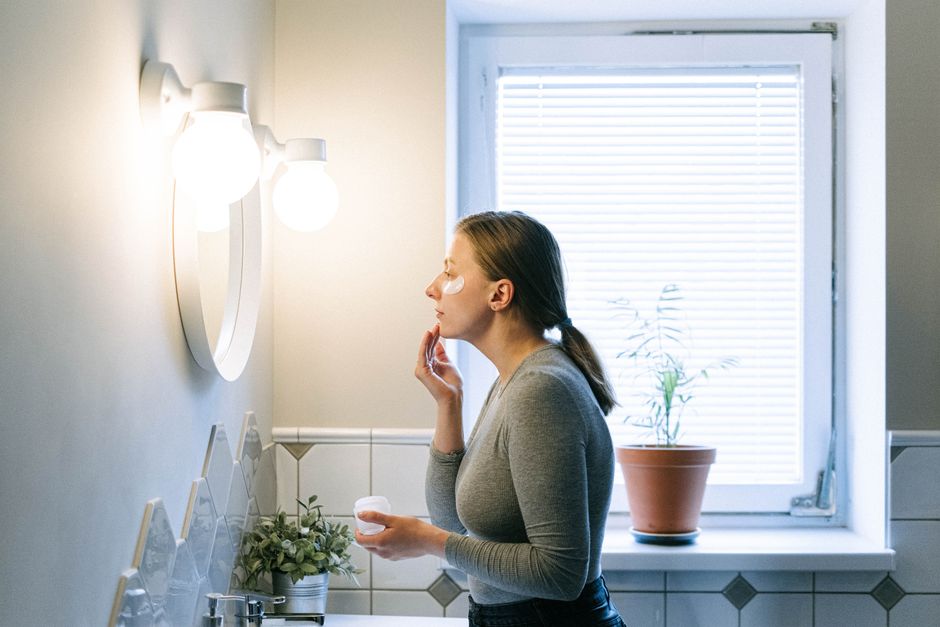
The protocol below serves as a reference for individuals with zero retinoid experience and a normal-combination skin type; each step should be doubled in length for sensitive skin.
Before starting retinol application, add a barrier-repairing product containing ceramide, cholesterol, and fatty acid to your routine for 4 weeks. Understanding what ceramide is and how it supports the skin barrier explains why this phase is critical: applying retinol without a sufficient ceramide reserve rapidly depletes the barrier lipid layer.
Start applying only on Friday nights (this keeps the weekend "barrier recovery window" open). Use the sandwich method. Morning SPF 30+ mineral sunscreen is essential.
If there's no redness, peeling, or burning by the end of the fourth week, application days are doubled (e.g., Tuesday-Friday). Continued use of a barrier-supporting pre-retinol serum should continue during these weeks.
When raising concentration, drop the frequency back down to 1 night; increase frequency to 2 once 2 weeks of adaptation to the new concentration are established. Using a skin moisture meter (corneometer) during this period is valuable for tracking your TEWL level.
The same rule applies before every concentration jump: increase frequency first, then jump the dose. If a sign of active barrier damage appears (burning, painful redness, chronic flaking), go back down to the previous dose and stay there for at least 6 weeks.
When Should You Stop?
The retinol protocol should be suspended and switched to the barrier repair phase in the following situations: widespread facial redness and a burning sensation, peeling and bleeding areas, and irritation exceeding 48 hours after retinol application. The barrier repair guide details a 10-day emergency recovery protocol to follow in these conditions.
Retinol and the Skin Barrier: Why Is the Relationship So Critical?
Retinol's most-discussed downside is its potential to increase transepidermal water loss (TEWL), especially during the starting period. The mechanism behind this increase is that the retinoid signal temporarily reorganizes the tight junction proteins and lipid lamellar structure in the stratum corneum.
TEWL and Retinol Use
Clinical measurements show that formulations containing 0.1% retinol raise baseline TEWL by an average of 12-18% during the first 4 weeks. As explained in our TEWL guide, this increase runs alongside declining stratum corneum hydration levels and a disruption in the barrier's lipid ratios. However, by week 12, measurements return to baseline values; this proves that retinization reverses the effect on the barrier.
The Ceramide-Cholesterol-Fatty Acid Balance
Epidermal barrier function largely depends on the ratio of ceramide (50%), cholesterol (25%), and free fatty acids (15%) in the stratum corneum. When this balance is disrupted during retinol use, barrier permeability increases. Our skin barrier guide covers in detail how to preserve this lipid balance. Closing the ceramide gap both increases tolerance during retinol use and optimizes long-term effectiveness.
The CIRÈLL Biomimetic TriBarrier System and Retinol Titration
The CIRÈLL Biomimetic TriBarrier System offers a three-layer barrier support strategy during retinol titration. The first layer supports the lamellar lipid layer with ceramide analogs; the second layer contains biomimetic peptides that support the occludin and claudin tight-junction proteins; the third layer increases the epidermis's natural moisturizing factor (NMF) production through active ingredients that stimulate synthesis of the filaggrin precursor protein. This three-part structure gets through the temporary barrier stress created by a retinol concentration increase with minimal damage and speeds up titration.
Which Skin Types Should Start at Which Dose?
The retinol starting dose should be determined not just by "skin thickness" or "oily/dry" classification, but by multiple barrier parameters.Sorg et al., 2006
Can start at 0.05%; 2 nights a week with the sandwich method is recommended. If 8 weeks pass without irritation, you can move to 0.1%.
Can start between 0.05-0.1%; oily skin generally has a thicker, less reactive epidermal layer. However, retinol concentration should be lowered during periods of active inflammation.
Should start at 0.025%. Since stratum corneum water content is already below the critical level in dehydrated skin conditions, retinol can worsen the TEWL increase.
Should start at 0.025%, 1 night a week. Dermatologist approval should be obtained if there's a rosacea tendency. Our rosacea guide explains how to titrate retinol for this group.
Retinol use is contraindicated during active atopic dermatitis. It can be started at 0.025% under a dermatologist's supervision during remission. See our atopic skin guide for details.
Due to skin thinning, the starting dose should be 0.025%, with a slower progression. However, this age group sees the most pronounced anti-aging benefits from retinol; 0.3-0.5% can be targeted long-term if tolerated.
Pregnancy and Breastfeeding
All retinoid forms are among the ingredients to avoid during pregnancy and breastfeeding. Safe alternatives like azelaic acid or niacinamide should be preferred during this period.
Starting for Young People and Those in Their 20s
Retinol use in your 20s is chosen more for acne and pore visibility than for early anti-aging effects. Barrier resilience is generally high in this age group; you can start at 0.05-0.1%, though stabilizing the barrier first is recommended if active acne is present.
Combination Use: What Should and Shouldn't Be Used With Retinol?
Managing your routine during retinol titration is a far more decisive factor than the retinol dose alone. Wrong combinations compound barrier disruption; the right combinations speed up titration.
Compatible Ingredients
| Ingredient | Relationship With Retinol | Application Recommendation |
|---|---|---|
| Niacinamide (2-5%) | Supports barrier ceramide synthesis, reduces erythema risk | Can be used before or after retinol the same night |
| Panthenol (1-5%) | Supports keratinocyte proliferation, shows a soothing effect | Ideal in the moisturizer layer over retinol |
| Hyaluronic acid | Increases stratum corneum hydration, balances the TEWL effect | As a light water-based serum before retinol |
| Ceramide complexes | Directly supports the lamellar lipid layer | Before retinol or during the barrier repair phase |
| Madecassoside | Anti-inflammatory effect, soothes retinol irritation | As a night cream ingredient after retinol |
Combinations to Avoid
The same night as AHA/BHA: When glycolic acid, lactic acid, or salicylic acid are applied on the same night as retinol, the cumulative pressure on the barrier increases markedly. We recommend checking our dedicated guide for detailed information on AHA/BHA and the skin barrier. Acids and retinol should be split across different nights.
Benzoyl peroxide: Oxidizes retinol, reducing its effectiveness; they shouldn't be used in the same routine.
High-concentration vitamin C (L-ascorbic acid): Should be split into separate sessions (morning vitamin C, night retinol) due to pH conflict and oxidative damage potential.
Other retinoids: Combining retinol with adapalene, tretinoin, or bakuchiol causes an unnecessary cumulative dose.
Seasonal and Environmental Factors: How Do They Affect the Titration Schedule?
Retinol titration should be adapted not just to skin type, but to seasonal conditions as well. Low humidity in winter and the dry indoor air created by heating systems can lower stratum corneum water content by 10-15%; barrier fragility increases under these conditions.
Winter Protocol
Freeze concentration increases in winter; prefer staying at your current dose. Increase the amount of barrier-supporting products (ceramide, panthenol, squalane) you use. Using a humidifier to keep indoor humidity in the 40-60% range is helpful. Our moisture loss guide covers strategy and ingredient recommendations specific to this period comprehensively.
Summer Period: Sun Protection
Retinol thins the stratum corneum and increases sensitivity to UV radiation. Adding an SPF 30-50 broad-spectrum sunscreen to the morning routine is essential during summer. Otherwise, the increase in collagen synthesis retinol provides can be overshadowed by increased UV-driven oxidative damage and hyperpigmentation risk. Evening application of retinol should be preferred in sun-exposed areas, and morning use should be strictly avoided.
Pollution and Urban Stress
Air pollution (PM2.5, ozone, PAHs) increases barrier oxidative stress and speeds up ceramide breakdown. Slowing retinol titration and increasing antioxidant use (e.g., niacinamide, tocopherol) is recommended for urban living with high pollution exposure.
What Do These Signs on Your Skin Mean?
After starting retinol, changes in your skin can sometimes make it hard to tell what belongs to the tolerance process and what signals genuine barrier damage.
Redness and burning spread across the face that doesn't pass within 24-48 hours after retinol application is a sign of serious barrier disruption. In this case, retinol should be temporarily stopped, and only barrier-repairing products should be used.
Mild flaking seen in the first 4-6 weeks is an expected result of the accelerated keratinocyte cycle; this falls under "normal retinization." However, if there's deep peeling or a wet-eczema-like appearance, application should be stopped.
The tightness that occurs as stratum corneum moisture content drops during retinol use is a clinical sign of rising TEWL. Increasing use of a ceramide-based moisturizer and applying the sandwich method markedly reduces this sign.
Ongoing surface redness without flaking suggests rosacea-like reactivity or the development of contact dermatitis. If it's localized particularly around the nasolabial fold or nose, dermatologist evaluation is necessary.
Conclusion
Retinol is one of the most scientifically well-established anti-aging and barrier-renewing actives; but this effectiveness only comes through with the right starting dose and a barrier-friendly titration protocol. An approach that starts at 0.025%, increases frequency before concentration, and listens to barrier signals at every step minimizes both short-term irritation and long-term barrier damage risk.
The CIRÈLL Biomimetic TriBarrier System supports the ceramide-cholesterol-fatty acid balance with active ingredients at every stage of this titration process; this lets you reach retinol's promised clinical results without compromising barrier integrity. Before starting your retinol routine or increasing your current dose, understanding the relationship between retinol and the skin barrier is the essential first step to building the right individual protocol.
Frequently Asked Questions
What should the retinol starting dose be?
The retinol starting dose for individuals who have never used a retinoid before is between 0.025% and 0.05%. This low concentration engages the skin's retinol metabolism (the retinol → retinaldehyde → retinoic acid conversion chain) while minimizing irritation risk to the epidermal barrier. Sensitive, dehydrated, or barrier-damaged skin can start at 0.025%, while normal and oily skin can start at 0.05%. The first application should be 1 night a week; the sandwich method (moisturizer — retinol — moisturizer) increases barrier tolerance. Concentration should be increased no sooner than 8-12 weeks later.
How does retinol work in the skin? What is its mechanism?
After being applied in the all-trans retinol form, retinol converts to its active form within the skin through two enzymatic steps: first, the retinol dehydrogenase enzyme converts retinol to retinaldehyde, then retinaldehyde dehydrogenase converts retinaldehyde to retinoic acid. Retinoic acid alters gene expression by binding to the nuclear RAR and RXR receptors; this process regulates keratinocyte proliferation and differentiation, increases procollagen type I and III synthesis in fibroblasts, and suppresses matrix metalloproteinase (MMP) enzymes. As a result, wrinkle depth decreases, skin tone evens out, and collagen density increases.
What percentage should you start at, and how long does it take to reach 1%?
The recommended starting concentration for individuals with zero retinoid experience is 0.025-0.05%. The time needed to reach the 1% target depends on individual barrier resilience, but generally requires an average of 12-18 months of consistent titration. The general rule is: stay at least 8-12 weeks irritation-free at the current dose before moving to each new concentration; application frequency should be increased before concentration. Rushed titration leads to barrier damage, persistent irritation, and dry skin problems.
What is the retinol titration protocol?
The retinol titration protocol is the process of reaching the target dose from the starting dose in a controlled manner. The core principle is: first increase frequency (from 1 to 2 times a week, then 2 to 3), then increase concentration (from 0.025% to 0.05%, etc.). With every concentration change, frequency is dropped back to 1 and adaptation to the new dose is established. Products containing ceramide and fatty acid should be added to the routine 4 weeks before starting retinol for barrier preparation. In cases of active irritation, deep peeling, or painful redness, titration is stopped and the barrier repair phase begins.
Which ingredients can be used together with retinol?
Ingredients that can be safely combined with retinol include: niacinamide (2-5%), ceramide complexes, panthenol, hyaluronic acid, madecassoside, and squalane. These ingredients support barrier repair and balance retinol irritation. Combinations to avoid: AHA/BHA acids (the same night), benzoyl peroxide (oxidizes retinol), high-concentration L-ascorbic acid (pH conflict), and other retinoids. AHA/BHA and retinol should be split across different nights; vitamin C should be used in the morning, retinol at night.
Can dry and sensitive skin use retinol?
Yes, dry and sensitive skin can use retinol; but the starting concentration should be limited to 0.025% and applied only 1 night a week. Since barrier lipid reserve is already low in these skin types, retinol's TEWL-increasing effect is felt more markedly. The sandwich method (moisturizer — retinol — moisturizer) is essential for these skin types. Barrier-supporting products containing ceramide and panthenol are an integral part of the sensitive-skin retinol protocol. Retinol use should be avoided during active eczema or perioral dermatitis.
At what age should you start using retinol?
There's no specific minimum age limit to start using retinol; however, use under age 18 without a dermatologist's recommendation isn't advised. In your 20s, retinol can be started at a low dose (0.05-0.1%) for acne and pore visibility. In your 30s, doses of 0.1-0.3% are suitable against early aging signs. Individuals over 50 should start more slowly, at 0.025%, due to skin thinning; but this age group sees the most pronounced anti-aging benefits from retinol. All retinoids should be avoided during pregnancy and breastfeeding.
Is retinol use safe in winter?
Retinol use is safe in winter; but the titration pace should be slowed, and staying at the current concentration is recommended. Low outdoor humidity, indoor heating, and reduced moisture increase barrier fragility. During this period, increasing use of moisturizers containing ceramide, panthenol, and squalane and postponing the transition to a new concentration step to spring is recommended. Indoor humidity should be kept between 40-60%, and long hot showers should be avoided. Sun protection shouldn't be neglected in winter either.
How long does it take for retinol to show results?
Retinol's clinical effects are observed at different time frames depending on concentration and frequency of use. The first improvement in pore and skin texture can be noticed by weeks 4-8. A marked reduction in wrinkle depth has been measured at weeks 12-16 in clinical studies. Full effect on deep photoaging findings requires 6-12 months of regular use. In terms of effect continuity, retinol's benefits gradually diminish once use is stopped; this is why it should be planned as a long-term routine component.
What are retinol's side effects, and when do they return to normal?
The main side effects seen during retinol's starting period are: redness (erythema), mild peeling, dryness, a tightness sensation, and increased light sensitivity. These are expected signs of the "retinization" process and generally decrease within 4-8 weeks. Side effects run markedly milder when starting at 0.025% concentration, though this varies from person to person. If serious side effects develop (painful erythema, bullous reaction, significant facial swelling), use should be stopped immediately and a dermatologist consulted. Application around the eyes, lips, and nostrils should be avoided.
When should you see a doctor while using retinol?
A dermatologist should be consulted in the following situations: widespread redness and burning exceeding 48 hours, bleeding or wet peeling, an eczematous appearance suggesting contact dermatitis, redness in the eyes and blurred vision, or significant swelling developing after application. It's also strongly advised that individuals with rosacea, perioral dermatitis, active eczema, or on immunosuppressive therapy get dermatologist approval before starting retinol. Dermatologist evaluation is also required when transitioning to prescription tretinoin or adapalene.
Where should retinol go in your routine order?
Retinol is applied in the night routine after cleanser, before moisturizer and oil-based products. The recommended order is: (1) Facial cleanser, (2) Toner or water-based serum, (3) A light moisturizer (the sandwich method's first layer, left to dry), (4) Retinol, (5) Night cream or ceramide-based moisturizer (the sandwich method's second layer). Retinol shouldn't be used in the morning routine; SPF 30+ sunscreen should be applied instead. An active vitamin C serum belongs to the morning routine and shouldn't be mixed with nighttime retinol.
How does retinol affect the skin barrier?
Retinol creates a temporary disruptive effect on the epidermal barrier during the starting period: TEWL can increase by 12-18% due to the reorganization of stratum corneum lipid lamellae and temporary changes in tight-junction proteins (occludin, claudin). This disruption largely reverses once the retinization process (usually 8-12 weeks) is complete. Over the long term, regular retinol use increases filaggrin production, raising natural moisturizing factor (NMF) levels and strengthening barrier function. Managing this dual effect requires products with ceramide supplementation to accompany the retinol protocol.
What's the difference between retinol and tretinoin? Which is more effective?
Tretinoin (all-trans retinoic acid) requires no conversion within the skin; it binds directly to RAR receptors. This makes it 10-20 times more effective than retinol, with results observed much faster. However, irritation risk is proportionally higher too; tretinoin is prescription-only and used under a dermatologist's supervision. Retinol, meanwhile, is the option found in cosmetic formulations — slower due to its conversion process, but more tolerable. Retinol is a more suitable starting point for individuals with sensitive skin and barrier damage; transitioning to tretinoin can be considered once long-term tolerance has developed.
Can retinol be used together with barrier repair?
Yes; retinol and a barrier repair protocol aren't just compatible together — this combination is the most successful strategy for retinol titration. When barrier-repairing products containing ceramide, cholesterol, and fatty acid are used before or after retinol application, they suppress the TEWL increase, shorten the retinization period, and ease irritation that develops during concentration increases. The CIRÈLL Biomimetic TriBarrier System supports this integrated approach: the Ceramide, Cholesterol, and Phytosphingosine trio offers a supportive buffer layer against the temporary barrier stress retinol creates.
Do retinol products deliver value for their price?
Retinol is among the most comprehensively proven cosmetic actives in terms of clinical effectiveness; years of accumulated research data support its price-to-effectiveness ratio. However, an expensive 1% retinol product delivers zero benefit if it's abandoned due to irritation because the skin wasn't ready yet. Starting with a lower-concentration product and titrating patiently is more advantageous than rushing to a high-dose product, both in terms of cost and barrier safety. Formulation quality matters just as much as concentration: stabilized retinol (encapsulated, resin-based, or oil-based systems) offers a longer shelf life and higher bioavailability.

Mine Ekber
CIRÈLL Formulation & Content Team
A content editor who works with the CIRÈLL R&D team on skin barrier physiology. The scientific claims on this page are based on peer-reviewed sources verified through PubMed/NCBI; the source list is below.
Scientific Sources
- Kang S, Bergfeld W, Gottlieb AB, et al. Long-term efficacy and safety of tretinoin emollient cream 0.05% in the treatment of photodamaged facial skin. Am J Clin Dermatol. 2005;6(4):245-253.
- Varani J, Warner RL, Gharaee-Kermani M, et al. Vitamin A antagonizes decreased cell growth and elevated collagen-degrading matrix metalloproteinases and stimulates collagen accumulation in naturally aged human skin. J Invest Dermatol. 2000;114(3):480-486.
- Mukherjee S, Date A, Patravale V, et al. Retinoids in the treatment of skin aging: an overview of clinical efficacy and safety. Clin Interv Aging. 2006;1(4):327-348.
- Zasada M, Budzisz E. Retinoids: active molecules influencing skin structure formation in cosmetic and dermatological treatments. Postepy Dermatol Alergol. 2019;36(4):392-397.
- Sorg O, Kuenzli S, Kaya G, Saurat JH. Proposed mechanisms of action for retinoid derivatives in the treatment of skin aging. J Cosmet Dermatol. 2006;5(4):271-280.