
How to Use Jojoba Oil in Your Skincare Routine (Layering Order)
Key Facts
- Jojoba oil should be the last step in a routine, applied after humectant serums and moisturizer have had time to absorb.
- Two to three drops is enough for the full face — more does not improve absorption and just sits on the skin's surface.
- Jojoba's wax-ester structure gives it high oxidative stability, so it holds up well when mixed directly into a moisturizer rather than applied as a separate layer.
- Applying oil before sunscreen can affect how evenly a mineral SPF spreads, so most people find nighttime the simpler time to use it.
Not sure where jojoba oil fits in your routine?
Tell us your current products and order, and we'll help you slot it in correctly.
Ask on WhatsAppEcz. Mine Ekber
Where Face Oils Fit in the Product Layering Hierarchy
Skincare layering generally follows a thinnest-to-thickest, water-to-oil logic: cleanser, then toner or essence, then water-based serums (humectants like hyaluronic acid or niacinamide), then moisturizer, then any facial oil, and finally sunscreen during the day. This order exists because water-based and humectant ingredients need direct contact with slightly damp skin to work — a layer of oil applied first would coat the skin and physically block that absorption. Our pH ladder routine order guide and layering order guide cover this general sequencing principle in more depth. Jojoba oil, despite being chemically a wax rather than a triglyceride oil, follows the same rule as other facial oils: it goes last, not first.
Functionally, jojoba oil sits somewhere between a humectant and a true occlusive. It is lighter and more sebum-like than a heavy occlusive such as petrolatum or shea butter, but it still forms enough of a surface film to slow water loss when applied as the final step — which is exactly why sequencing matters.Abdalla et al., 2024

Step-by-Step: Building a Jojoba-Inclusive Routine
Evening Routine
Cleanse. Remove makeup, sunscreen, and the day's buildup with a gentle, pH-appropriate cleanser.
Apply water-based serums. Humectants and actives like niacinamide, hyaluronic acid, or a retinoid go onto slightly damp skin and need a few minutes to absorb.
Apply moisturizer. Let it settle for a minute or two.
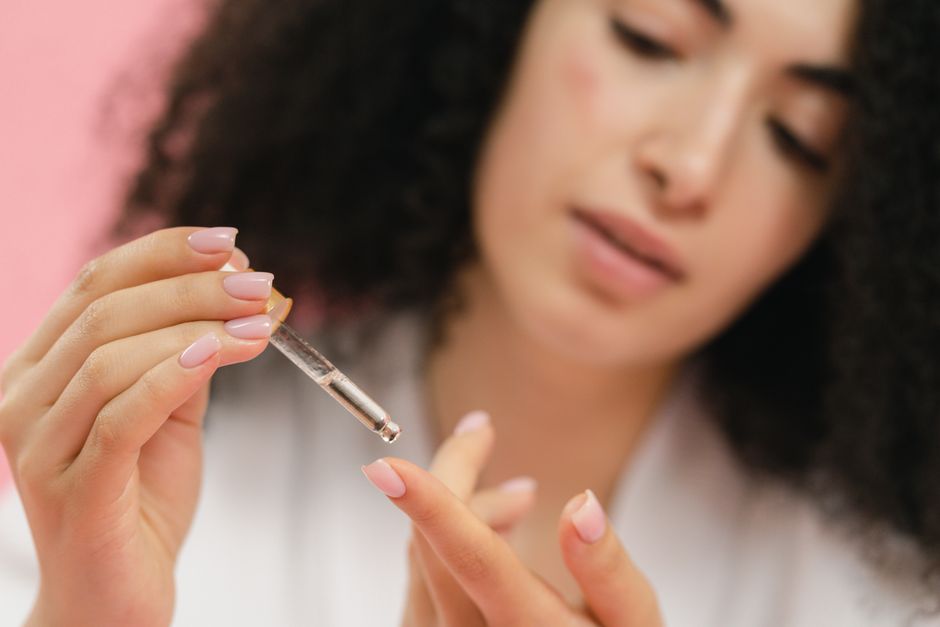
Finish with 2–3 drops of jojoba oil. Warm it between your palms and press it onto the face and neck as the final sealing step.
Morning Routine
Cleanse or rinse. A light rinse or gentle cleanser is usually enough in the morning.
Apply serum and moisturizer as usual.
Optional: a very thin layer of jojoba oil on dry zones only, if needed, before sunscreen — allow a few minutes for it to settle so it doesn't disrupt how evenly the SPF spreads.
Apply sunscreen as the final step, always.

Common Layering Mistakes
The most frequent mistake is applying jojoba oil before a humectant serum rather than after — this seals the skin surface before the water-based active has had a chance to penetrate, effectively wasting the more expensive product underneath. The second most common mistake is over-application: because jojoba oil absorbs relatively quickly compared with heavier oils, people assume more is better, but excess oil simply sits on the surface, can look shiny, and may increase the odds of pilling when layered under makeup. A third mistake is applying jojoba oil directly onto broken, actively inflamed, or freshly exfoliated skin, where any topical ingredient — however gentle — has a higher chance of causing stinging or irritation until the surface has recovered.
Can You Mix Jojoba Oil Directly Into Moisturizer?
Yes. Mixing a few drops of jojoba oil into your regular moisturizer in your palm before application is a common and reasonable alternative to applying it as a separate final layer, particularly for people who find an extra step tedious. This does dilute the oil's concentration somewhat and mixes its finish into the moisturizer's texture rather than leaving a distinct top layer, but for most skin types the practical difference is minor. It will not meaningfully change the moisturizer's own performance, since jojoba's wax-ester chemistry does not react with the humectants or emulsifiers typically used in facial moisturizers.
What Do These Signs Mean for You?
This often means the oil was applied before the humectant serum had time to absorb, sealing in dehydration rather than hydration.
Usually a sign of over-application — two to three drops is the practical ceiling for most faces.
Layering oil under a heavy occlusive on already oily skin can feel congesting; try it alone as the final step instead.
Too many layers, or product not given enough time to absorb between steps, are the most common causes.
Conclusion
Jojoba oil earns its place at the very end of a skincare routine, not because it is inferior to other products, but because its function — sealing and finishing — only works correctly when everything underneath it has already absorbed. A few drops, applied last, after water-based serums and moisturizer, is the version of "using jojoba oil correctly" that the underlying chemistry actually supports.
CIRÈLL treats layering order as inseparable from ingredient choice — the same product performs differently depending on where it sits in a routine, and getting that sequence right is often what separates a routine that works from one that doesn't.
Frequently Asked Questions
Should jojoba oil go before or after moisturizer?
After — jojoba oil works best as the final step of a routine, applied once your moisturizer has had a minute or two to settle.
Can I use jojoba oil before sunscreen?
You can, but apply it thinly and allow it to settle first, since a heavier oil layer can affect how evenly mineral sunscreen spreads across the skin.
How many drops of jojoba oil should I use?
Two to three drops is typically enough for the entire face; more does not improve results and mainly adds surface shine.
Can I mix jojoba oil into my moisturizer instead of applying it separately?
Yes, mixing a few drops into your moisturizer in your palm is a reasonable shortcut that works well for most skin types.
Does jojoba oil go before or after serum?
After — serums, especially water-based humectants and actives, should always be applied to clean, slightly damp skin before any oil layer.
Is jojoba oil better for morning or evening use?
Evening use is simpler for most people, since it avoids any interaction with sunscreen application; if used in the morning, apply it thinly and before SPF.
Can jojoba oil be layered under makeup?
It can, but allow a few extra minutes for full absorption first to reduce the chance of makeup pilling on top.
What happens if I apply jojoba oil before my serum by mistake?
The serum's active ingredients may not penetrate as effectively, since the oil layer can partially block absorption — it isn't harmful, but it reduces the serum's efficacy.
Can jojoba oil replace my moisturizer entirely?
Not reliably — jojoba oil functions as a finishing emollient, not a full moisturizer, and most skin types still benefit from a humectant-containing moisturizer underneath it.

Hasan Solmaz
CIRÈLL Formülasyon & İçerik Ekibi
Cilt bariyeri fizyolojisi konularinda CIRÈLL AR-GE ekibiyle birlikte çalisan içerik editoru. Bu sayfadaki bilimsel iddialar PubMed/NCBI üzerinden dogrulanan hakemli kaynaklara dayanir; kaynak listesi asagidadir.
Scientific Sources
- Abdalla S, Aroua MK, Gew LT. A Comprehensive Review of Plant-Based Cosmetic Oils (Virgin Coconut Oil, Olive Oil, Argan Oil, and Jojoba Oil): Chemical and Biological Properties and Their Cosmeceutical Applications. ACS Omega. 2024;9(44):44019-44032.
- Ranzato E, Martinotti S, Burlando B. Wound healing properties of jojoba liquid wax: an in vitro study. J Ethnopharmacol. 2011;134(2):443-449.