

Skin Care After Threading and Waxing: Barrier Soothing Guide
Key Facts
- TEWL values can rise 40-60% above baseline in the first hour immediately after waxing — a figure that shows just how quickly barrier integrity breaks down.
- Hair follicle extraction mechanically breaches the keratinocyte barrier and triggers release of pro-inflammatory cytokines like IL-1α and TNF-α, clinically visible as erythema, edema, and a burning sensation.
- Panthenol (D-panthenol/pro-vitamin B5) applied at 0.1-1% has been clinically shown to accelerate post-irritation barrier repair and significantly reduce TEWL.
- The CIRÈLL Biomimetic TriBarrier System brings ceramide, cholesterol, and free fatty acids together in a 1:1:1 molar ratio to re-scaffold the stratum corneum's lamellar structure within hours of the procedure.
- Cold compress (15-20°C, 5-10 minutes) applied to the treated area slows local blood flow, visibly suppressing histamine release and the resulting itch-redness cycle within the first 10 minutes after the procedure.
Have a clinical question?
Consult directly with our pharmacist.
Consult via WhatsAppPharm. Mine Ekber
How Threading and Waxing Affect the Skin Barrier: Mechanism and Biology
The redness and sensitivity that appear on skin after hair removal and barrier disruption aren't coincidental — they're a predictable biological response. Understanding this chain of events in this section will clarify why specific ingredients are needed afterward.
How Does the Mechanical Damage Occur?
When classic wax or sugar-paste hair removal is applied, hair is pulled not just from the surface but from the root — from the follicle in its anagen or catagen phase. During this process, micro-tears form in the interfollicular epidermis surrounding the follicle, and the tight junctions between the stratum granulosum and stratum spinosum are temporarily disrupted. Threading works similarly: rather than cutting hair, thin twisted thread rubs against the skin and pulls hair out from the follicle, but it also adds superficial epidermal abrasion from the mechanical friction. Both procedures ultimately trigger the same biochemical domino effect: the ceramide-cholesterol-fatty acid balance in the stratum corneum's lipid lamellae is disrupted, water-retention capacity drops, and barrier function against outside factors weakens.
The Inflammatory Cascade: From IL-1α to Erythema
Following keratinocyte damage, damage-associated molecular patterns (DAMPs) are released. These molecules activate Langerhans cells and mast cells, triggering release of IL-1α, IL-6, and TNF-α. These cytokines increase dermal vascular permeability; the result is visible erythema, mild edema, and a burning sensation that peaks 15-30 minutes after the procedure. If the skin barrier was already weakened before the procedure (unmoisturized, sun-exposed, or acid-damaged skin), the inflammatory response is more severe and longer-lasting.Proksch et al., 2008
Folliculitis and Hyperpigmentation Risk
When a follicle opening stays open, skin-resident bacteria — Staphylococcus epidermidis chief among them — can colonize inside the follicle, becoming visible as folliculitis papules within 24-48 hours. Post-inflammatory hyperpigmentation (PIH) risk is particularly high in Fitzpatrick III-VI skin types, since melanocytes increase melanogenesis in response to inflammatory cytokines. This is why, in the days after waxing, sun protection and anti-inflammatory barrier care are less an aesthetic concern than a medical precaution.
The First 24 Hours After Hair Removal: A Step-by-Step Barrier Soothing Protocol
When applied in the right order with the right ingredients, post-procedure recovery shortens dramatically. The following protocol is built on dermocosmetic practice, with steps grounded in scientific support for barrier repair.
Immediately after the procedure, a cold compress (15-20°C) prepared with a clean, preferably sterile gauze or cotton cloth is applied to the area for 5-10 minutes. Ice should never touch the skin directly; direct contact can cause more dermal capillary damage. Cold induces localized vasoconstriction, slowing histamine and prostaglandin release and cutting the acute itch-redness cycle short.
The area is lightly cleansed with a sulfate-free, non-foaming micellar water or gel cleanser in the pH 4.5-5.5 range. Alcohol-based toners, astringents, or soap should never be used; these further destroy the remaining lipid barrier and raise TEWL a second time. After cleansing, the area should be pat-dried rather than rubbed.
A soothing ingredient should be applied to skin immediately while it's still lightly damp, not dry. A product containing 1-5% panthenol supports epidermal repair by accelerating keratinocyte migration." Formulas containing madecassoside are also a well-suited choice in the first hours after the procedure, given their generally recognized anti-inflammatory and skin-soothing properties.Ebner et al., 2002
2-3 minutes after the serum absorbs, a ceramide-forward barrier cream is applied. Ceramides make up roughly 50% of the stratum corneum's total lipid content; this proportion drops in the treated area after the procedure. Topical ceramide-containing products have clinical evidence showing they can bring TEWL back to baseline within 4-6 weeks of use. Cholesterol's presence in the formula is also critical — as covered in how cholesterol relates to the skin barrier, this lipid regulates the fluidity of lamellar granules and accelerates barrier repair.
A broad-spectrum (UVA+UVB), SPF 50+ physical or chemical sunscreen should be applied without fail the first morning after the procedure and for the following 5-7 days. Damaged follicles and open inflammatory areas are far more sensitive to UV radiation; leaving them unprotected triggers melanogenesis and sets the stage for lasting hyperpigmentation.
What to Avoid in the First 24 Hours
| Product / Behavior to Avoid | Why It's Harmful | Alternative |
|---|---|---|
| Alcohol-based toner / fragranced lotion | Dissolves barrier lipids, raises TEWL | pH-balanced, sulfate-free cleanser |
| AHA / BHA exfoliants | Chemical damage and burning in open follicles | Wait at least 7 days; see our AHA/BHA and skin barrier guide |
| Retinol/retinoid products | Accelerates keratinocyte turnover, disrupts barrier repair | Wait 7-10 days; see our retinol and skin barrier guide for details |
| Hot showers / sauna / steam bath | Increases vasodilation, prolongs inflammation | Lukewarm-to-cool shower; wait at least 24 hours after the procedure |
| Physical exfoliants / loofahs | Mechanical friction doubles folliculitis risk | Avoid until healing completes (3-5 days) |
| Tight / synthetic clothing | Friction and occlusion encourage bacterial proliferation | Loose, cotton clothing |
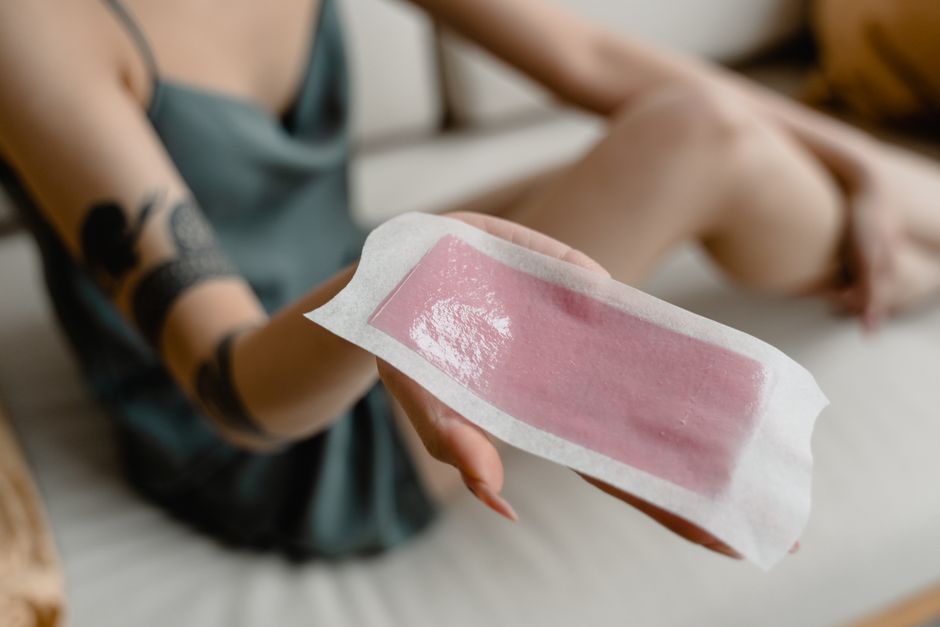
The CIRÈLL Biomimetic TriBarrier System's Role in Post-Hair-Removal Care
What skin needs after waxing or threading isn't just "moisturizing" — it's genuinely replacing the barrier's structural building blocks. The Biomimetic TriBarrier System, developed by CIRÈLL, is designed specifically to fill that gap.
The System's Three Pillars
Ceramide NP, ceramide AP, and ceramide EOP are combined in ratios that mimic the stratum corneum's own lamellar composition. This structure closes the intercellular lipid gaps left open after the procedure and begins lowering TEWL within hours.
The combination of sodium hyaluronate and panthenol regulates water movement in the epidermis. Panthenol, as pro-vitamin B5, supports cellular energy metabolism and keratinocyte proliferation, physically speeding up barrier repair.
This layer, containing ectoin and madecassoside, modulates the cytokine-mediated inflammatory response. Ectoin stands out particularly for its protective activity on the cell membrane under UV and chemical stress, providing dual protection for skin exposed to sun after hair removal.
Who Especially Needs This System?
While barrier repair matters for every skin type, the following profiles are priority candidates: people with sensitive skin, those diagnosed with or prone to rosacea, those with an atopic baseline, and people who use chemical peels or acids regularly. Post-hair-removal barrier repair time can be longer in these profiles, and a more intensive formula may be needed — a pattern consistent with how skin type, anatomic location, and other individual factors shape epidermal barrier function.Darlenski & Fluhr, 2012
Barrier Damage Differences Between Threading and Waxing
While both hair-removal methods cause barrier damage, they differ in mechanism and intensity — which somewhat changes the care protocol.
| Feature | Waxing (Wax / Sugar) | Threading |
|---|---|---|
| Damage mechanism | Hair-root extraction + adhesive epidermal stripping | Hair-root extraction + superficial mechanical abrasion |
| TEWL increase | High; more pronounced over larger areas | Moderate; concentrated in a narrow area (upper lip, brows) |
| Folliculitis risk | Moderate-high (especially with hot wax and residue) | Low-moderate; higher with synthetic thread |
| Hyperpigmentation risk | Moderate; cumulative with repeated sessions | Low-moderate; friction-induced PIH possible |
| Priority care ingredient | Ceramide + cholesterol + TEWL blocker | Soothing agents (madecassoside, panthenol) + barrier cream |
| Urgency of sun protection | Very high; broad surface stripping | High; upper-lip area especially UV-sensitive |
Special Care for the Brow and Upper Lip After Threading
These areas have both a thin epidermal layer and denser vascularization, so erythema after threading is more pronounced and longer-lasting here. Follicular density is also higher on the upper lip, raising folliculitis risk. Rubbing the face, applying any active ingredient besides a moisturizer (niacinamide included), and applying makeup are not recommended for the first 48 hours after the procedure.
Post-Wax Barrier Care by Skin Type
Skin type's metabolic profile is one of the most important variables in determining how quickly it recovers after the procedure. No single protocol works equally well for every skin type.
Oily and Acne-Prone Skin
In oily skin, sebum production theoretically supports barrier repair; but the occlusive sebum layer can create an anaerobic environment in open follicles after the procedure, encouraging bacterial proliferation. This is why gel-cream formulas and light squalane-based products should be preferred over heavy barrier creams, prioritizing non-comedogenic ingredients. Squalane stands out as a lightweight, biomimetic option that's compatible even with oily skin.
Dry and Dehydrated Skin
In dry and dehydrated skin, the barrier is already weakened before the procedure; the TEWL spike is more dramatic and recovery takes longer. In this profile, a three-layer strategy of humectant (hyaluronic acid) + emollient (ceramide) + occlusive (shea butter, petrolatum) is critical — a combination that reflects the broader role topical emollients and moisturizers play in managing dry, barrier-compromised skin.Lodén, 2003 Understanding how TEWL is measured and managed is also useful for long-term care planning.
Sensitive and Reactive Skin
In sensitive skin, mast cell activation happens faster, and the inflammatory window opens both earlier and wider. People in this profile should start barrier-supportive care 3-5 days before the procedure, avoid applying any active ingredient on the day of the procedure, and stick to minimal-ingredient formulas (fewer than 5 ingredients) afterward. Those who are rosacea-prone or diagnosed should review our rosacea-prone skin guide and consult a dermatologist before deciding on hair removal.
Mature Skin (45+)
After age 45, ceramide synthesis can drop by 30-40%; the barrier's self-repair capacity after a procedure is correspondingly lower. In this age group, topical ceramide and cholesterol supplementation takes on particular importance, and the rate of moisture loss (% moisture loss/hour) is meaningfully higher than in younger skin.Harding et al., 2000
Pre-Wax Preparation: A Barrier-Strengthening Strategy
The best post-hair-removal care actually starts before the procedure. A barrier-strengthening protocol applied beforehand raises skin's readiness for trauma and positively affects post-procedure healing.
What to Do Starting 7 Days Before
A ceramide-containing moisturizer is applied to the treatment area twice daily; this builds up the barrier's baseline reserve going into the procedure. As covered in our moisturizer guide, the humectant + emollient combination maximizes local hydration capacity.
Stopping products containing AHA, BHA, retinol, and high-concentration niacinamide at least 48 hours before the procedure lets the barrier enter the procedure at its highest state of readiness.
UV damage inhibits lipid synthase enzymes critical for ceramide synthesis. Regular sun protection in the week of the procedure keeps barrier capacity high both before and after.
Light physical or enzymatic exfoliation helps hairs come out evenly and reduces ingrown-hair risk; but doing it less than 48 hours before the procedure has the opposite effect.
What These Signs on Your Skin Mean
Understanding which signs on your skin after threading or waxing are normal and which require intervention lets you respond in a timely, appropriate way.
Diffuse redness in the first 30-60 minutes after the procedure is normal — it's the clinical reflection of localized vasodilation from pro-inflammatory cytokine release. If it hasn't faded within 2-4 hours, or is spreading, this suggests a lack of barrier-supportive product or a possible allergic response.
This forms when free nerve endings (TRPV1 channels) are provoked after stratum corneum damage. It's expected to pass within a few hours with cold compress and panthenol. If burning persists past 12 hours or intensifies, contact dermatitis should be considered.
Small red-pink papules clustered around follicle openings that appear 24-48 hours after the procedure are a sign of folliculitis. It's usually caused by S. epidermidis and typically clears within 3-5 days with a gentle, antimicrobial-containing cleanser. Deep, painful forms accompanied by fever require dermatology consultation.
This is the product of post-inflammatory melanocyte activation, appearing 1-3 weeks after the procedure, particularly in Fitzpatrick III-VI skin types. It can largely be prevented with early sun protection; established cases can be treated with niacinamide, azelaic acid, or alpha-arbutin formulas — but only after the barrier has fully repaired.
This occurs around days 3-7, when the closing follicle opening prevents the hair tip from piercing through the epidermal layer, causing it to grow sideways instead. Regular light exfoliation and ceramide-based moisturizing meaningfully reduce this risk; picking or cutting at the area increases inflammation and scarring risk.
This is the clinical reflection of disrupted lamellar granules and elevated TEWL. If skin feels "tight," constricted, or shows fine flaking, it means the ceramide-cholesterol repair cream wasn't applied enough or wasn't sufficient. Significant dryness points to the need for a more comprehensive barrier management protocol, particularly around moisture loss.

Conclusion: The Right Post-Hair-Removal Barrier Care Is a Strategic Process, Not a Quick One
Post-wax skin care goes well beyond a simple "apply moisturizer" habit. The biological cascade triggered by mechanical trauma — rising TEWL, inflammatory cytokine release, and an open follicle opening — are sequential stages, each requiring its own intervention. Care applied with the right ingredients in the right order, across the window stretching from the first 10 minutes to 7-10 days, both speeds acute recovery and prevents longer-term complications like hyperpigmentation and folliculitis.
CIRÈLL's Biomimetic TriBarrier System was developed to meet this multi-stage need after hair removal within a single formulation logic: a ceramide-cholesterol combination that rebuilds the lamellar structure, panthenol that accelerates cellular repair, and madecassoside and ectoin that modulate inflammation. These ingredients align precisely with what barrier repair scientifically requires. You can reach out to our expert team for a protocol personalized to your skin type and procedure.

Frequently Asked Questions
What is post-wax skin care and why is it necessary?
Post-wax skin care is a multi-stage dermocosmetic protocol aimed at repairing the mechanically-damaged stratum corneum barrier layer, reducing TEWL (transepidermal water loss), and calming the inflammatory response. During waxing or threading, hair follicles are pulled from the root; during this process, intercellular lipid lamellae are disrupted, follicle openings stay open, and pro-inflammatory cytokines are released. Left untreated, this can result in redness, burning, folliculitis, and long-term hyperpigmentation. With proper barrier care, recovery time shortens noticeably and complication risk drops.
Why does redness occur after waxing, and how long does it last?
Post-hair-removal redness occurs when damaged keratinocytes release pro-inflammatory mediators like IL-1α, TNF-α, and prostaglandins, causing vasodilation in dermal capillaries. Clinically, this mechanism appears as erythema, or redness. Under normal circumstances, it peaks in the first 30-60 minutes after the procedure and noticeably fades within 2-4 hours with cold compress and a soothing product. In people who skip barrier care or have sensitive/reactive skin, this can extend to 24-48 hours. If redness is still present after 48 hours, allergic contact dermatitis or folliculitis should be ruled out.
Which active ingredients should not be used after hair removal?
These ingredients should be strictly avoided for the first 48-72 hours after waxing or threading: AHA (glycolic acid, lactic acid), BHA (salicylic acid), retinol and retinoids, high-concentration niacinamide (above 5%), alcohol-based toners, and fragranced products. All of these further erode an already-damaged barrier structure, cause chemical irritation in open follicles, and prolong recovery time. Safe alternatives include ceramide-containing barrier creams, panthenol, madecassoside, ectoin, and pure hyaluronic acid.
How soon after waxing should moisturizer be applied?
After the cold compress (first 10 minutes), once skin is cleansed and pat-dried, a soothing, barrier-repairing product should be applied as soon as possible — ideally within 15-30 minutes of the procedure. Ceramide- and panthenol-containing formulas applied in this window intervene at the early stage of barrier damage and prevent TEWL from climbing further. The earlier the intervention, the shorter the inflammatory cascade lasts and the faster recovery happens.
Is post-threading care different from post-waxing care?
While the core principles (cold compress, ceramide barrier, sun protection) are the same, post-threading care has a few nuances. Because threading is applied specifically to the brow and upper lip area, the damaged area is smaller but more concentrated. Since follicular density is high in the upper lip area, folliculitis risk can be relatively elevated. Also, because of threading's superficial abrasion component, a soothing madecassoside or panthenol gel — applied before a cream — stands out as the recommended starting step. Makeup should be delayed for at least 24 hours after either procedure.
How often should a ceramide-containing product be applied?
In the first 72 hours after hair removal, a ceramide-containing barrier cream should be applied at least 2-3 times a day: morning (before sunscreen), evening (after cleansing), and in the afternoon if needed. Ceramides need time to integrate into the stratum corneum's lamellar structure, so frequent, regular application is more effective than a single large amount. After the first 72 hours, applying twice daily for a week is recommended.
How should people with sensitive skin approach post-hair-removal care?
In sensitive skin, mast cell threshold is lower, so the inflammatory response develops faster and more severely. The ideal protocol for this profile: use a ceramide- and ectoin-containing barrier strengthener for 3-5 days before the procedure, choose minimal-ingredient formulas (fewer than 5 ingredients) afterward, avoid any active ingredient for 48 hours, and repeat cold compress applications during the day as needed. CIRÈLL's resources on sensitive skin offer a useful starting point for more comprehensive guidance.
Is post-hair-removal care different in summer versus winter?
Yes, seasonal conditions directly affect post-epilation barrier management. In summer, with a higher UV index, sun protection (SPF 50+) becomes much more critical; UV damage accumulates faster in open follicles and inflamed areas, raising PIH (post-inflammatory hyperpigmentation) risk. Sweating also speeds bacterial proliferation when follicle openings are open, making loose, cotton clothing especially important. In winter, TEWL runs at a higher baseline due to low humidity, and occlusive ingredients should be prioritized. In both seasons, ceramide+cholesterol repair creams remain an unchanging core of the protocol.
What should I look for when choosing post-wax skin care products?
An effective post-hair-removal barrier product should meet these criteria: the formula should contain at least one ceramide type (NP, AP, or EOP), cholesterol, or phytosphingosine; the ingredient list should not contain alcohol (ethanol, denatured alcohol), fragrance, high-concentration exfoliating acids, or retinol. A formulation pH between 4.5 and 5.5 matters for both barrier function and microbiome balance. Additionally, containing anti-inflammatory ingredients like madecassoside or panthenol boosts the product's effectiveness in the first hours after the procedure. Products labeled non-comedogenic are especially safe for hair-removal areas.
What should be done if folliculitis develops after waxing?
Small pink or red papules forming around follicle openings 24-48 hours after the procedure indicate superficial folliculitis. In this case, gently cleansing the area with lukewarm water first, then applying a light formula with antimicrobial activity (for example, low-concentration tea-tree-oil products or azelaic-acid formulas), is recommended. Scratching the area or popping the papules is strongly discouraged, as it can carry infection deeper. Folliculitis that doesn't resolve within 5-7 days, is painful, comes with fever, or develops into deep nodules requires dermatology consultation.
When should I see a dermatologist after hair removal?
Dermatology evaluation shouldn't be delayed if any of the following apply: redness and swelling that's increasing or spreading after 48 hours; local pain accompanied by fever or systemic symptoms; deep, painful, inflamed nodules (carbuncle-type folliculitis); sudden-onset raised hives or large blisters (allergic contact dermatitis); or dark spots that haven't faded 2-3 weeks after the procedure (for early PIH treatment). People with an underlying skin condition like rosacea or atopic dermatitis should ideally already be making hair-removal decisions under a dermatologist's guidance.
What order should products be applied in for post-wax barrier repair?
The correct layering order is: 1. Cold compress (immediately after the procedure, 5-10 minutes); 2. Light pH-balanced cleansing (if the area has residue from waxing); 3. Skip toner — alcohol/acid risk is high; 4. A lightweight soothing serum or gel (panthenol, madecassoside, hyaluronic acid); 5. A ceramide+cholesterol barrier cream (2-3 minutes after the serum absorbs); 6. In morning applications, a broad-spectrum SPF 50+ sunscreen is added as the final step. This order follows the thin-to-thick layering principle and lets each layer support the effect of the one before it.
How is post-hair-removal skin care connected to barrier repair?
Post-hair-removal skin care is, at its core, a barrier repair process. The stratum corneum contains a lamellar lipid matrix made of ceramide, cholesterol, and free fatty acids, and this structure forms both the physical and chemical barrier. Waxing mechanically disrupts this matrix, opens follicle openings, and raises TEWL. Barrier repair products work by directly addressing this damage — replacing building blocks like ceramide. Understanding how the skin barrier functions as a whole clarifies exactly why post-hair-removal care matters this much.
Is post-hair-removal care harder for people over 45?
Yes — with age, ceramide synthesis drops by 30-40%, and cholesterol and free fatty acid production also decline. This means the barrier's baseline reserve is lower than in younger skin, so the response to hair-removal trauma is slower and recovery takes longer. Topical ceramide and cholesterol supplementation becomes especially critical for people over 45; product formulas are expected to be rich in these ingredients. PIH risk also increases in this age group, so sun protection protocol should be applied more strictly. A 5-7 day pre-procedure strengthening routine becomes a standard recommendation for mature skin.
What's the fastest natural method for post-wax redness and burning?
The fastest evidence-based, practical method for post-wax redness and burning is a cold compress in the 15-20°C range; this induces vasoconstriction, slowing histamine and prostaglandin release within minutes. Along with the cold compress, following up with a barrier gel containing 1% or more panthenol reduces TRPV1-driven burning within hours. Pure, alcohol-free aloe vera gel can also provide temporary soothing relief; but for long-term barrier repair, a formula containing ceramide and cholesterol is needed. Ice should never be applied directly to skin — it can cause microcapillary damage.
References
- Proksch E, Brandner JM, Jensen JM. The skin: an indispensable barrier. Exp Dermatol. 2008;17(12):1063-1072.
- Ebner F, Heller A, Rippke F, Tausch I. Topical use of dexpanthenol in skin disorders. Am J Clin Dermatol. 2002;3(6):427-433.
- Darlenski R, Fluhr JW. Influence of skin type, race, sex, and anatomic location on epidermal barrier function. Clin Dermatol. 2012;30(3):269-273.
- Harding CR, Watkinson A, Rawlings AV, Scott IR. Dry skin, moisturization and corneodesmolysis. Int J Cosmet Sci. 2000;22(1):21-52.
- Lodén M. Role of topical emollients and moisturizers in the treatment of dry skin barrier disorders. Am J Clin Dermatol. 2003;4(11):771-788.
Further Reading
CIRÈLL Barrier Repair Cream
The scientific skin barrier principles discussed in this article form the foundation of the CIRÈLL Biomimetic Tribarrier Cream formulation.
View the Product