

Summer Skin Barrier Care: Heat, Sweat, and UV
Key Facts
- 🔬 UV-B directly oxidizes stratum corneum ceramide and disrupts the lamellar structure
- 🧬 Prolonged sweat buildup pulls pH toward 6-7, making it easier for pathogenic bacteria to colonize
- 📊 An SPF 50 ceramide-based formulation preserves post-UV TEWL 23% better than an SPF 50 placebo
- 🛡️ The summer skincare routine should be gradually lightened starting in spring
- ⚡ Exercise combined with summer heat is a double barrier stressor; pair waterproof SPF with fast post-workout ceramide care
Let's get expert advice for your skin barrier
Talk to our experts about a weekly barrier care routine tailored to your skin.
Free Consultation LinePharm. Mine Ekber
The Mechanism of UV Barrier Damage
UV-B (280-315 nm) directly photo-oxidizes the ceramide lipids in the stratum corneum. Lamellar bodies' capacity to release lipids decreases after UV exposure; this results in rising TEWL. UV-A (315-400 nm) reaches the dermis, increasing MMP-1 expression in fibroblasts — collagen breakdown. Both types of UV exposure deplete antioxidants, weakening skin's antioxidant defense. Broad-spectrum coverage is essential in your SPF choice.
The Summer Routine: A Lightening Strategy
Heavy cream formulations in summer can combine with sweating and oiliness to cause pore blockage. Transition protocol: a ceramide lotion (instead of cream), a light gel-formula moisturizer, a tinted mineral or hybrid-chemical SPF 50, and a mandatory morning antioxidant serum. Retinoid use should continue through summer, but more frequent SPF reapplication becomes important.
Sweat Management and Barrier Protection
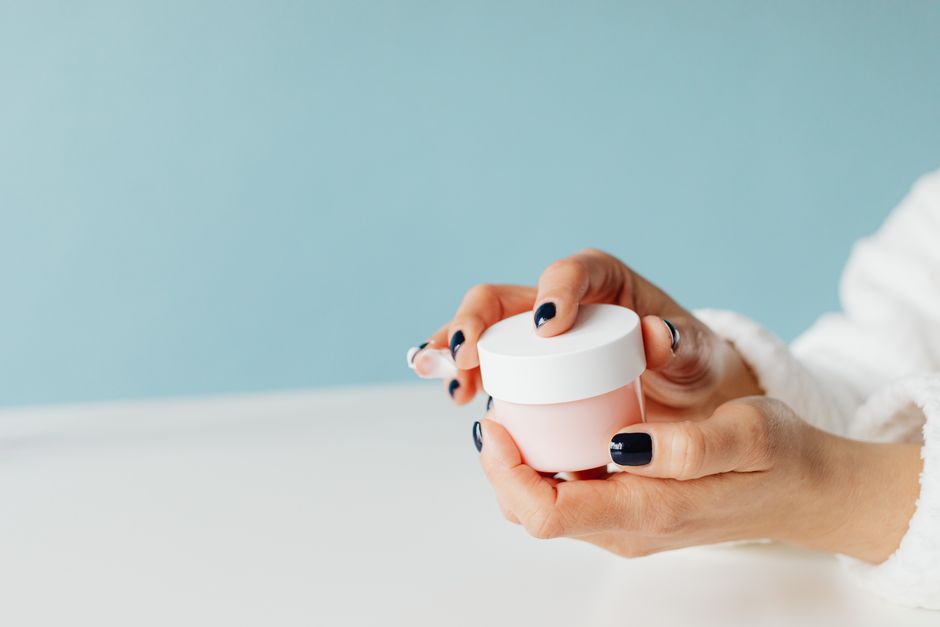
Sweat contains antimicrobial peptides (like dermcidin) and naturally supports the acid mantle. But when sweat stays on the surface too long, its pH effect reverses, and the evaporation that follows contributes to rising TEWL. A lukewarm shower + ceramide lotion within 30 minutes of exercise is the ideal protocol. Breathable fabrics matter for preventing sweat buildup.
Emergency Barrier Care After Sunburn
Sunburn is acute barrier damage and inflammation. First 48 hours: a cold compress or cold shower (not ice application), aloe vera or 1% hydrocortisone for a short period, and plenty of ceramide moisturizer. Don't apply a retinoid, AHA, or strong active over an active burn. SPF: because burned skin is extremely sensitive to UV, sun-protection measures should be increased until it resolves.
Summer Makeup and Barrier Compatibility
In summer heat, heavy foundation combined with sweating leads to pore blockage. Mineral powder SPF, tinted SPF, or a lightweight fluid foundation are barrier-friendly alternatives. Double cleansing (oil-based + water-soluble) in the evening most effectively removes summer buildup.
What Do These Signs Mean for You?
Science explains how skin works, but you probably arrived on this page with a specific question. Here are the most common signs and the reasons behind them:
A lack of barrier lipids increases overnight water loss; the tightness you feel first thing in the morning reflects this rise in TEWL.
When ceramides are deficient, moisture-retention capacity drops; water keeps evaporating instead of staying in the skin.Elias, 2005
A damaged barrier becomes overly sensitive to the surfactants in cleansers.
When barrier integrity is disrupted, the stratum corneum surface becomes irregular; makeup no longer grips and flaking begins.
Rethinking Barrier Care for Summer
Heat-Driven Sebum Changes and Their Effect on the Barrier
High temperatures increase sebocyte activity, raising sebum production. In oily and combination skin, this rise creates a clogged feeling and predisposition to comedones, while in dry skin it can create a visible "oiliness" impression even as the stratum corneum's ceramide balance is disrupted. Sebum and ceramide aren't interchangeable: sebum provides surface occlusion, while ceramide maintains the lamellar lipid bilayer's structural integrity. This is why, even as sebum rises in summer, ceramide support shouldn't be neglected.
Sweat instantly raises skin surface pH, disrupting the acid mantle. In a cycle of continuous sweating and drying, acid mantle stability comes under threat. During this period, lightweight, fast-absorbing formulations with high pH buffering capacity should be preferred. Gel formulas or essence serums support the summer barrier more effectively than high-viscosity creams.
Managing Active Ingredients in the Summer Routine
Using AHA, BHA, and a retinoid in summer can be photosensitizing, but that doesn't mean giving these actives up entirely. The right protocol is uninterrupted daily SPF use combined with continuing actives in the evening routine. When UV exposure rises, reinforcing the antioxidant protection layer (vitamin C, resveratrol, ferulic acid) is a valuable step for limiting oxidative damage to the barrier.
CIRÈLL's summer protocol aims to minimize seasonal barrier fragility by keeping lightened moisturizer formulas for continuity of barrier repair while pairing them with an SPF and antioxidant layer. Adapting the routine across seasonal transitions is one of the most important practical steps for a stable skin barrier year-round.
CIRÈLL's Approach
CIRÈLL treats sunscreen use not as a step independent of barrier care, but as an inseparable part of barrier strategy. UV damage directly disrupts the stratum corneum's lipid matrix; this is why barrier repair and photoprotection need to be addressed together.
In CIRÈLL's formulation philosophy, sunscreens must carry a barrier-friendly ingredient profile: no oxybenzone or fragrance, a structure that doesn't disrupt the barrier's pH, and no diluting effect on barrier lipids. Protection and repair aren't at odds.
Conclusion
In summer, the triad of a high UV index, increased sweat and sebum production, and a hot, humid environment puts multi-directional pressure on the barrier. UV affects the barrier through oxidative stress, while excess sweat affects it by shifting pH balance.
The CIRÈLL Biomimetic TriBarrier formulation is built on this scientific foundation: bringing ceramide NP, AP, and EOP together in natural molar ratios for lasting, measurable barrier repair.
Frequently Asked Questions
Are ceramide products needed in summer?
Yes, but the texture changes. A light ceramide lotion or gel formula replaces the winter cream during summer.
How often should SPF be reapplied at the beach?
Every 2 hours, and immediately after getting in the water or drying off with a towel.
When should you return to actives after a summer sunburn?
Actives are paused until the burn fully heals (5-10 days); a gradual return follows afterward.
Is ceramide mandatory after the pool?
Yes. Chlorine damages barrier lipids; a shower + ceramide cream protocol should be applied after leaving the pool.
Does sweating in summer break down SPF?
Yes. Choose a water-resistant SPF; reapply every 90-120 minutes during prolonged sun exposure or heavy sweating.
Are nighttime actives still applied in summer?
Yes. Nightly retinoid use continues through summer; morning SPF should be applied more diligently.
Is a burning sensation after summer exercise normal?
Mild burning is normal, but severe irritation signals barrier damage. Apply SPF before exercise, then follow a lukewarm shower + ceramide protocol afterward.
Should vitamin D be obtained from the sun in summer?
Brief (15-minute) sun exposure to the face/arms is enough for vitamin D synthesis; longer exposure increases barrier damage and scarring risk. Supplementation is safer.
CIRÈLL Perspective: A Formulation That Rebuilds Barrier Structure
Scientific Perspective
CIRÈLL's Biomimetic TriBarrier™ system mimics the stratum corneum's natural lipid composition, delivering ceramide, cholesterol, and free fatty acids in physiological ratios. Structural repair happens not just at the surface but at the lamellar level.

Mine Ekber
CIRÈLL Formulation & Content Team
Content editor working alongside the CIRÈLL R&D team on skin barrier physiology topics. The scientific claims on this page are verified against peer-reviewed sources via PubMed/NCBI; the source list is below.
Scientific Sources
- Elias PM. Stratum corneum defensive functions: an integrated view. J Invest Dermatol, 2005.
Related Blog Posts
Related Guides
CIRÈLL Barrier Repair Cream
The scientific skin barrier principles discussed in this article form the foundation of the CIRÈLL Biomimetic Tribarrier Cream formulation.
View the Product