
Cholesterol and the Skin Barrier: The Overlooked Second Pillar of Barrier Lipids
Cholesterol and the Skin Barrier: The Overlooked Second Pillar of Barrier Lipids
- Cholesterol constitutes approximately 25% of stratum corneum barrier lipids, functioning together with ceramide and fatty acids.
- Cholesterol deficiency destabilizes the lamellar lipid phase and critically reduces ceramide efficacy.
- At age 60, stratum corneum cholesterol levels are approximately 30–40% lower than at age 30.
- Topical cholesterol application has been shown in clinical studies to significantly accelerate post-damage repair rate.
- Dietary cholesterol and topical cholesterol operate in independent compartments; topical application does not affect blood cholesterol levels.
- CIRÈLL's TriBarrier System delivers ceramide + cholesterol + fatty acid at a 1:1:1 molar ratio within a physiological lamellar emulsion.
Reach out to our experts for personalized guidance on cholesterol, ceramide, and CIRÈLL TriBarrier.
Consult via WhatsAppContents
- What Is Cholesterol? Its Chemical Role in the Stratum Corneum
- Lamellar Phase Fluidity: Cholesterol's Barrier Physics
- Cholesterol, Ceramide, and Fatty Acid: The Triad Balance
- Aging and Cholesterol Loss
- Signs of Cholesterol Deficiency
- Dietary vs. Topical Cholesterol: The Difference
- Selecting a Cholesterol-Containing Product
- Cholesterol + Ceramide Combination: Clinical Evidence
- Cholesterol Defects Across Different Skin Conditions
- A Cholesterol-Supporting Care Routine
- Conclusion
- Frequently Asked Questions
Cholesterol is, together with ceramide and fatty acids, one of the three foundational lipids of the stratum corneum's lamellar architecture. Without this triad present at a physiological ratio, the lamellar bilayer cannot be fully constructed, and barrier function remains incomplete.
1. What Is Cholesterol? Its Chemical Role in the Stratum Corneum
Cholesterol is a lipid molecule belonging to the sterol family, consisting of a single hydroxyl group (-OH) and a four-ring steroid backbone. Serving a fluidity-regulating function in cell membranes generally, cholesterol takes on a similar but specialized role in the stratum corneum: it optimizes the physical phase — between rigid gel and liquid crystal — of the skin barrier's lamellar lipid matrix.[1]
Cholesterol in the stratum corneum exists predominantly in free form. Derivatives such as cholesterol esters and cholesterol sulfate are also present, but it is free cholesterol that is decisive for barrier function. Released from lamellar bodies during barrier repair, cholesterol reorganizes the lamellar architecture within the intercellular space together with ceramide and fatty acids.
Cholesterol alone cannot construct an adequate barrier. Without ceramides, cholesterol struggles to form a layered structure; without free fatty acids, the resulting layers cannot adequately restrict water permeability. This triadic interdependence places "combined lipid formulation" — rather than "solo lipid application" — at the center of skin science.[2]
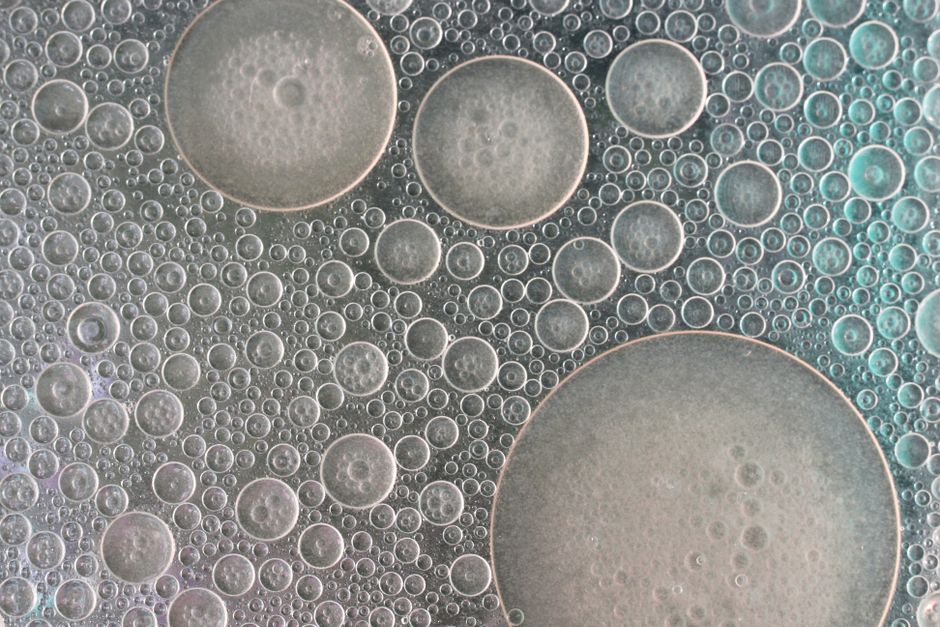
2. Lamellar Phase Fluidity: Cholesterol's Barrier Physics
"The stratum corneum's lipid matrix is not a homogeneous fat layer; it is a delicate architecture organized into layered (lamellar) phases. Cholesterol serves as this architecture's fluidity buffer."
Cholesterol's Phase-Regulating Role
Ceramides tend to form rigid structures with a high melting point. While this rigid gel phase is effective for water permeability, excessive rigidity compromises the lamellar architecture's mechanical flexibility and sets the stage for micro-fissure formation. Cholesterol balances this through the following mechanisms:
- Softens the rigid gel phase: Inserts between ceramide chains, preventing full crystallization
- Stabilizes the liquid crystal phase: At very low cholesterol levels, the fluid phase is also disrupted, unexpectedly raising water permeability
- Enables temperature adaptation: Keeps the lamellar architecture's permeability stable across seasonal and ambient temperature shifts
- Optimizes lipid packing: Allows fatty acid chains to pack tightly, increasing water-diffusion resistance per lamellar layer
| Cholesterol Status | Lamellar Organization | Water Permeability | Barrier Efficacy |
|---|---|---|---|
| Optimal (25% of lipids) | LPP + SPP intact, balanced phase | Minimum | Highest |
| Mildly deficient (15–20%) | SPP disrupted, LPP weakened | Mildly elevated | Reduced |
| Markedly deficient (below 10%) | Lamellar phase disrupted | Markedly elevated | Severely impaired |
| Excessive (35%+) | Liquid crystal dominant, rigid gel reduced | Moderately elevated | Reduced |
| Cholesterol alone (no ceramide) | No lamellar architecture forms | Very high | Non-functional |

3. Cholesterol, Ceramide, and Fatty Acid: The Triad Balance
One of skin science's most foundational findings is that ceramide, cholesterol, and free fatty acids must work together for barrier repair. A deficiency in any single member of this triad impairs barrier function regardless of the presence of the other two.[2]
The Mechanism of the Triad Balance
Elias and Feingold's canonical studies demonstrated that barrier repair can be partially achieved through topical application of any one of these three lipid classes, but that repair rate reaches its maximum when the true physiological ratio (approximately 1:1:1 molar ratio) is presented.[3]
| Lipid Applied | Barrier Repair at Hour 4 | Barrier Repair at Hour 24 | Full Repair Time |
|---|---|---|---|
| Cholesterol alone | 30% | 60% | >72 hours |
| Ceramide alone | 35% | 65% | >72 hours |
| Fatty acid alone | 25% | 55% | >96 hours |
| Ceramide + Cholesterol | 55% | 80% | 48–60 hours |
| Cholesterol + Fatty Acid | 50% | 75% | 48–72 hours |
| Ceramide + Cholesterol + Fatty Acid (1:1:1) | 80% | 95% | 24–36 hours |
The CIRÈLL TriBarrier System is built precisely on this principle. Bringing together Ceramide NP+AP+EOP, cholesterol, and physiological fatty acids at a 1:1:1 molar ratio, this formulation replicates the stratum corneum's own lipid matrix as closely as possible. This approach supports the fastest, most durable barrier repair process.
The TriBarrier Principle: Cholesterol does not function as an emollient, but as a lamellar partner to ceramide and fatty acid. In the CIRÈLL formulation, cholesterol's presence more than doubles ceramides' barrier efficacy. This is fundamentally, biologically distinct from an "add ceramide, forget cholesterol" approach.
4. Aging and Cholesterol Loss
Stratum corneum cholesterol levels decline progressively with age. This decline stems both from reduced epidermal lipid synthesis capacity and from a slowing lipid turnover rate.[4]
Stratum Corneum Cholesterol Profile by Age
The clinical consequences of cholesterol loss with age can be summarized as follows:
- Xerosis (age-related dry skin): A direct consequence of lamellar phase disruption
- Slow barrier repair: Healing following minor cuts and irritation is prolonged
- Increased sensitivity: Thin, translucent-appearing skin; heightened reactivity to contact
- Pruritus tendency: Nerve-ending activation threshold decreases under cholesterol deficiency
In this context, the importance of cholesterol-containing formulations in barrier repair protocols for older individuals is considerably more critical than for younger skin.

5. Skin Signs of Cholesterol Deficiency
Stratum corneum cholesterol deficiency does not present with a specific symptom set; its signs overlap with those of ceramide deficiency. Certain characteristic findings, however, are distinguishing.
Cholesterol provides the stratum corneum's mechanical flexibility. In its deficiency, skin appears fragile and "paper-thin"; susceptibility to tearing increases even under minimal trauma.
Cholesterol enables temperature adaptation; in its deficiency, barrier permeability rises abruptly after a hot shower or in cold weather, producing a burning sensation and redness.
Following minor cuts, peeling, or chemical irritation, skin heals considerably more slowly than normal. This delay becomes particularly pronounced with advancing age and raises the risk of chronic barrier damage.
Pruritus associated with cholesterol deficiency in sensitive skin responds minimally to moisturizer alone; a cholesterol+ceramide combination produces meaningful improvement.
Once the lamellar architecture is disrupted, desquamation (flaking) becomes irregular. Visible flaking, hardened patch-like appearance, and a matte surface result.
Under cholesterol deficiency, the lamellar architecture cannot retain a cream application; moisturizing effect fades within 2–3 hours. This pattern points to a need for a ceramide+cholesterol combination.

6. Dietary vs. Topical Cholesterol: The Difference
One of the most common misconceptions about cholesterol is the belief that restricting dietary cholesterol will affect skin cholesterol levels. This assumption is entirely incorrect, and understanding that these two compartments function independently at a biological level is critical for formulation selection.
Systemic (Diet-Derived) Cholesterol
- Absorbed from the intestine, processed by the liver
- Transported via LDL/HDL lipoprotein particles
- Reaches the epidermis through blood vessels
- Penetration into the stratum corneum's avascular structure is extremely limited
- Dietary cholesterol restriction does not meaningfully alter stratum corneum cholesterol levels
- Relevant to cardiovascular health; has no direct bearing on skin barrier function
Topical (Formulation) Cholesterol
- Applied directly to the stratum corneum
- Does not enter the bloodstream; produces no systemic effect
- Does not alter blood cholesterol profile (LDL/HDL)
- Bypasses the lamellar body mechanism to directly replenish the lipid matrix
- Can increase post-damage repair rate 2–3 fold
- Directly and measurably related to skin barrier health
This distinction carries significant practical weight: an individual with elevated blood cholesterol should not, for that reason, avoid cholesterol-containing skin products. Topical application has zero effect on blood cholesterol; on the contrary, it is a valuable intervention for reducing TEWL and strengthening the barrier.[5]

7. Selecting a Cholesterol-Containing Product
In cosmetic formulations, cholesterol appears on the INCI list as "Cholesterol." Its efficacy, however, is directly tied to the formulation as a whole — particularly the presence of ceramide and fatty acid.
Look for the term "Cholesterol" on the INCI list: Look for free cholesterol listed specifically as "Cholesterol," not Cholesterol Sulfate or other derivatives.
Confirm it is formulated alongside ceramide: Products containing cholesterol alone cannot fully complete the lamellar architecture. "Ceramide NP," "Ceramide AP," or "Ceramide EOP" should also appear on the INCI list.
Check for the fatty acid component: Stearic Acid, Palmitic Acid, or C16–22 range fatty acids should appear in the upper half of the list; without this triad, cholesterol and ceramide cannot function optimally.
Assess penetration technology: For a hydrophobic molecule like cholesterol to effectively enter the lamellar layer, favor lamellar emulsion or liposomal technology.
Pay attention to pH: The stratum corneum's physiological acidic pH (4.5–5.5) is the optimal environment for lipid-organizing enzymes. Alkaline formulations can disrupt this environment.
The CIRÈLL TriBarrier formulation meets all of these criteria: Cholesterol, Ceramide NP, Ceramide AP, and Ceramide EOP are presented together with physiological fatty acids within a lamellar emulsion matrix at acidic pH.

8. Cholesterol + Ceramide Combination: Clinical Evidence
The superiority of the cholesterol-ceramide combination in barrier repair is supported by an extensive clinical literature spanning from the late 1980s to the present.[1]
| Study (Author, Year) | Model | Cholesterol's Contribution | PMID |
|---|---|---|---|
| Elias et al., 1980 | Animal model, tape-strip | Cholesterol+ceramide combination accelerated barrier repair relative to a single lipid | 7373078 |
| Feingold & Elias, 2014 | Review | Stratum corneum cholesterol positively correlated with barrier function measures; low cholesterol predicted elevated TEWL | 24262790 |
| Rawlings & Harding, 2004 | Review, clinical studies | Cholesterol is a key functional component of emollient formulations used in treating xerosis | 14728698 |
| van Smeden et al., 2014 | AD patient lipidomics | Cholesterol is reduced in AD skin, correlating with disrupted lamellar phase organization | 24252189 |
| Loden M, 2003 | Review | Ceramide+cholesterol+fatty acid combination reduces TEWL more effectively than single-component formulations | 14572299 |

9. Cholesterol Defects Across Different Skin Conditions
Cholesterol deficiency or metabolic disruption has been identified across multiple skin conditions, including atopic dermatitis, psoriasis, and ichthyosis. The character of the cholesterol defect differs across these conditions.
| Condition | Character of the Cholesterol Defect | Lamellar Effect | Response to Topical Cholesterol |
|---|---|---|---|
| Atopic Dermatitis | Cholesterol low; Th2 cytokines suppress lipid synthesis | LPP disrupted; total lamellar content reduced | Good response when combined with ceramide |
| Psoriasis | Cholesterol sulfate accumulation; free cholesterol reduced | Abnormal keratinization; lamellar architecture disrupted | Partial; inflammation control required |
| X-Linked Ichthyosis | Steroid sulfatase enzyme deficiency; cholesterol sulfate accumulates, free cholesterol decreases | Severe lamellar disruption; desquamation | Cholesterol application produces marked improvement |
| Xerosis (Age-Related) | Cholesterol synthesis reduced with age | Both SPP and LPP weakened | Good response with ceramide+cholesterol+fatty acid combination |
| Rosacea | Barrier lipid profile disrupted; cholesterol low | Increased barrier permeability; vascular hyperreactivity | Supportive; contributes to reduced inflammation |
X-linked ichthyosis (XLI) is the condition that most strikingly demonstrates cholesterol's role in barrier function. When the steroid sulfatase enzyme fails to adequately convert cholesterol sulfate to free cholesterol, free cholesterol in the stratum corneum falls critically; the result is severe desquamation and barrier dysfunction. Topical cholesterol application has been shown to produce marked symptomatic improvement in these patients.[2]

10. A Cholesterol-Supporting Care Routine
Building a routine of complementary steps to optimize stratum corneum cholesterol levels is particularly important for dry, aging, or barrier-damaged skin.
Lipid-friendly cleansing: Choose a cleanser free of SLS and SLES, with low detergent concentration or a cream-based formula. Harsh cleansers strip stratum corneum lipids with every wash; cholesterol loss occurs alongside ceramide loss.
The 3-minute post-shower rule: Apply a ceramide+cholesterol+fatty acid product before moisture has fully evaporated. Application within this window facilitates the lamellar emulsion's penetration into the barrier layer.
A biomimetic lipid layer: Apply a product containing the ceramide+cholesterol+fatty acid combination morning and evening. Combine with daytime sunscreen; UV damages lamellar lipid organization.
Active-ingredient nights: On nights when applying retinol or acid peeling, always follow with a ceramide+cholesterol repair product. Active ingredients temporarily disrupt the stratum corneum lipid matrix; cholesterol supplementation completes the repair cycle.
Seasonal intensification: Low humidity and heating systems deplete stratum corneum cholesterol faster in winter. Apply the ceramide+cholesterol formulation more intensively (2–3 times daily, in a thicker layer) during cold months.
Niacinamide synergy: Niacinamide, which increases ceramide synthesis, also indirectly benefits cholesterol metabolism; adding a niacinamide serum to a ceramide+cholesterol product produces a synergistic result.
Actives That Support Cholesterol
- Niacinamide: Activates lipid synthesis enzymes
- Panthenol (B5): Contributes to fatty acid+cholesterol synthesis via coenzyme A
- Madecassoside: Suppresses inflammation; slows the cholesterol breakdown cycle
- Squalane: An intermediate of epidermal cholesterol synthesis; provides an emollient effect at the skin surface
- Ectoin: Stabilizes the lipid matrix; protects against osmotic stress
Practices to Avoid for Cholesterol
- High-detergent cleansers: Increase cholesterol stripping with every wash
- Excessively frequent face-washing: Mechanically disrupts the lipid matrix
- Very hot water: Dissolves both cholesterol and ceramide; keep morning showers below 37°C
- Alcohol-containing toners: Lipid-solvent effect; affects all stratum corneum lipids, cholesterol included
- Prolonged topical corticosteroid use: Suppresses lipid-synthesis enzymes
Conclusion: Cholesterol and the CIRÈLL TriBarrier Approach
Cholesterol is a component that cannot be overlooked when it comes to the skin barrier. Constituting a quarter of stratum corneum barrier lipids, this molecule ensures the lamellar phase's physical stability and increases ceramides' and fatty acids' barrier efficacy several-fold. Cholesterol's decline with age forms the biological basis of xerosis, sensitive skin, and slowed healing.
The oversimplification that "ceramide equals everything" in discussions of barrier lipids has overshadowed cholesterol's decisive role. The clinical evidence is clear: the triad balance — ceramide + cholesterol + fatty acid — achieves far superior barrier repair than any single component.
The CIRÈLL TriBarrier System presents this triad balance at a 1:1:1 molar ratio within a physiological lamellar emulsion. The cholesterol in this formulation functions within the stratum corneum entirely independent of circulating blood cholesterol; it does not affect systemic cholesterol levels. This scientific reality lies at the heart of the dermocosmetic approach: the right lipid combination, at the right ratio, replicates skin's own barrier biology.
CIRÈLL TriBarrier System: Ceramide NP + AP + EOP, cholesterol, and physiological fatty acids — at a 1:1:1 molar ratio — within a lamellar emulsion matrix. The cholesterol component optimizes lamellar phase fluidity in skin, multiplying ceramides' barrier efficacy. With zero effect on systemic cholesterol, this topical formulation is the only scientifically appropriate answer to stratum corneum biology.
Frequently Asked Questions
What is cholesterol's role in the skin barrier?
Cholesterol constitutes approximately 25% of stratum corneum barrier lipids. By optimizing the lamellar lipid matrix's physical phase — between rigid gel and liquid crystal — it increases ceramides' efficacy and minimizes water permeability. It cannot construct an adequate barrier alone; it functions together with ceramide and fatty acids.
Does topical cholesterol raise blood cholesterol levels?
No. Topical cholesterol functions within the stratum corneum and does not enter systemic circulation. It has no effect whatsoever on blood LDL or HDL cholesterol levels. Individuals with cardiovascular risk can safely use cholesterol-containing skin products.
Does cholesterol deficiency cause skin problems?
Yes. Reduced stratum corneum cholesterol destabilizes the lamellar phase, leading to signs such as dry skin, slow healing, pruritus, sensitivity, and excessive reaction to temperature change. X-linked ichthyosis most strikingly demonstrates cholesterol deficiency's effect on the skin barrier.
Why should ceramide and cholesterol be used together?
Ceramide and cholesterol are mutually obligate partners within the stratum corneum's lamellar architecture. Ceramide alone tends to form an excessively rigid crystalline phase; cholesterol softens this rigidity. Clinical studies show the combination roughly doubles barrier repair rate relative to a single component.
Why does skin cholesterol decline with aging?
Enzyme activity required for epidermal lipid synthesis (particularly HMG-CoA reductase and related pathways) declines progressively from age 40 onward. This biological decline occurs alongside ceramide loss and constitutes one of the foundational causes of xerosis, slow healing, and increased sensitivity.
Are cholesterol-containing products suitable for oily skin?
Yes. Increased sebum production in oily skin is not directly related to stratum corneum ceramide and cholesterol levels. Excessive washing, acid peeling, and retinol use also deplete barrier lipids in oily skin. Lightweight, non-comedogenic ceramide+cholesterol products are suitable for oily skin as well.
Is cholesterol level affected in atopic dermatitis?
Yes. In atopic dermatitis patients, Th2 cytokines (IL-4, IL-13) suppress lipid-synthesis enzymes; both ceramide and cholesterol levels decline. For this reason, AD treatment is recommended to apply not ceramide alone but the ceramide+cholesterol+fatty acid combination.
In what form is cholesterol found in the stratum corneum?
Cholesterol in the stratum corneum exists predominantly in free (non-esterified) form. Cholesterol sulfate is also present and plays a role in regulating desquamation. It is predominantly free cholesterol that is effective for barrier repair.
What does the 1:1:1 molar ratio mean?
The ceramide:cholesterol:fatty acid 1:1:1 molar ratio is based on clinical research findings showing that barrier repair occurs fastest and most completely when all three lipid classes are present in equal molar amounts in the stratum corneum. This ratio is the CIRÈLL TriBarrier System's core formulation principle.
Does restricting dietary cholesterol affect the skin?
Practically speaking, the effect is negligible. The stratum corneum is a largely avascular structure and builds its lipid compartment through epidermal synthesis mechanisms. Dietary cholesterol restriction may affect systemic cholesterol but does not meaningfully alter stratum corneum cholesterol levels.
What is cholesterol's role in psoriasis?
In psoriasis, steroid sulfatase activity is increased and cholesterol sulfate accumulation is observed; free cholesterol is reduced. This contributes to abnormal keratinization and lamellar architecture disruption. Topical cholesterol supplementation can play a supportive role in psoriasis, though inflammation control remains the priority.
Why is cholesterol critical in X-linked ichthyosis?
In X-linked ichthyosis (XLI), steroid sulfatase enzyme deficiency prevents cholesterol sulfate from being converted to free cholesterol; free cholesterol in the stratum corneum falls critically, while cholesterol sulfate accumulates. This results in severe desquamation and barrier dysfunction. Topical free cholesterol application markedly improves symptoms in these patients.
Is a cholesterol-containing product necessary when using retinol?
Yes. Retinol increases desquamation, temporarily disrupting the stratum corneum lipid matrix; both ceramide and cholesterol reserves decline. Using a ceramide+cholesterol barrier repair product on retinol nights shortens the adaptation period and improves tolerability.
What is the difference between a cholesterol-containing product and a moisturizer?
A conventional moisturizer (humectant) draws water to the skin's surface, producing a temporary sense of moisture. A biomimetic barrier formulation containing cholesterol+ceramide, by contrast, integrates into the stratum corneum lipid matrix and repairs actual barrier function; this effect is both longer-lasting and biologically deeper.
Why is cholesterol specifically important in CIRÈLL TriBarrier?
In CIRÈLL TriBarrier, cholesterol is the obligate component that physically optimizes ceramides' lamellar conformation. Without cholesterol, ceramides tend to form an excessively rigid crystalline phase and operate below the lamellar layer's capacity. Cholesterol's presence at least doubles ceramide efficacy; in the TriBarrier formulation, cholesterol is therefore not a complement to ceramide but a co-determinant.
References and Scientific Sources
- Feingold KR, Elias PM. Role of lipids in the formation and maintenance of the cutaneous permeability barrier. Biochim Biophys Acta. 2014;1841(3):280–294. PMID: 24262790
- Elias PM, Brown BE, Ziboh VA. The permeability barrier in essential fatty acid deficiency: evidence for a direct role for linoleic acid in barrier function. J Invest Dermatol. 1980;74(4):230–233. PMID: 7373078
- Elias PM. Stratum corneum defensive functions: an integrated view. J Invest Dermatol. 2005;125(2):183–200. PMID: 16098026
- Rawlings AV, Harding CR. Moisturization and skin barrier function. Dermatol Ther. 2004;17(Suppl 1):43–48. PMID: 14728698
- van Smeden J, Janssens M, Gooris GS, Bouwstra JA. The important role of stratum corneum lipids for the cutaneous barrier function. Biochim Biophys Acta. 2014;1841(3):295–313. PMID: 24252189
- Loden M. Role of topical emollients and moisturizers in the treatment of dry skin barrier disorders. Am J Clin Dermatol. 2003;4(11):771–788. PMID: 14572299
- Schade H, Bauer E, Darlenski R, Fluhr JW. Correlation between transepidermal water loss and skin surface cholesterol in patients with atopic eczema. Arch Dermatol Res. 2001;293(11):604–609.
- Meckfessel MH, Brandt S. The structure, function, and importance of ceramides in skin and their use as therapeutic agents in skin-care products. J Am Acad Dermatol. 2014;71(1):177–184. PMID: 24656726
- Feingold KR. Thematic review series: skin lipids. The role of epidermal lipids in cutaneous permeability barrier homeostasis. J Lipid Res. 2007;48(12):2531–2546. PMID: 17872588
- Bouwstra JA, Ponec M. The skin barrier in healthy and diseased state. Biochim Biophys Acta. 2006;1758(12):2080–2095. PMID: 16945325
- Choi MJ, Maibach HI. Role of ceramides in barrier function of healthy and diseased skin. Am J Clin Dermatol. 2005;6(4):215–223. PMID: 16060709
- Fluhr JW, Darlenski R, Surber C. Glycerol and the skin: holistic approach to its origin and functions. Br J Dermatol. 2008;159(1):23–34. PMID: 18510666
CIRÈLL's Cholesterol Commitment: The Importance of the Missing Piece
Most barrier repair formulations on the market focus on ceramide while neglecting cholesterol. CIRÈLL places this "forgotten lipid" at the center of its formulation.
- The 1:1:1 (ceramide:cholesterol:fatty acid) physiological ratio: the optimal combination confirmed by Elias and Feingold's research.
- Without cholesterol, the lamellar bilayer is unstable: water impermeability and barrier function remain incomplete.
- As age advances, skin cholesterol production declines while ceramide production is less affected — complete replenishment is critical.
- Cholesterol also provides lamellar phase selectivity; it is obligate for the ceramide-water phase to form.
A barrier formula without cholesterol is like a three-legged stool missing one leg — CIRÈLL closes this gap.