

The Most Common Mistakes in Barrier Repair
Key Findings
- The ceramide ratio in the stratum corneum makes up roughly 50% of the lipid matrix in healthy skin; this ratio drops noticeably with barrier damage.
- Over-cleansing the face removes the natural oil layer, raising transepidermal water loss (TEWL) within hours.
- Retinol and high-concentration AHA/BHA, applied before the barrier is repaired, make the irritation cycle impossible to break.
- CIRÈLL's Biomimetic TriBarrier System closes the most common gap in barrier repair by bringing together ceramide, cholesterol, and free fatty acids at physiological ratios.
Let's get expert advice for your skin barrier
Talk to our experts about a barrier care routine tailored to your skin.
Consult via WhatsAppPharm. Mine Ekber
Why Is the Skin Barrier So Fragile?
Understanding the skin barrier is the first step to making sense of the mistakes people make. The skin barrier is often described using the brick-and-mortar model: corneocytes are the bricks, and the lipid matrix is the mortar between them. This structure creates a physical shield against external threats while also preventing moisture loss from within.Elias, 2007
But preserving this structure isn't as easy as it sounds. The pollution modern life brings, over-cleansing habits, harsh cosmetic formulas, and interest in high-active products create a damage load that exceeds skin's natural repair capacity. So which mistakes are made most often during this process?
Mistake 1 — Excessive and Incorrect Cleansing
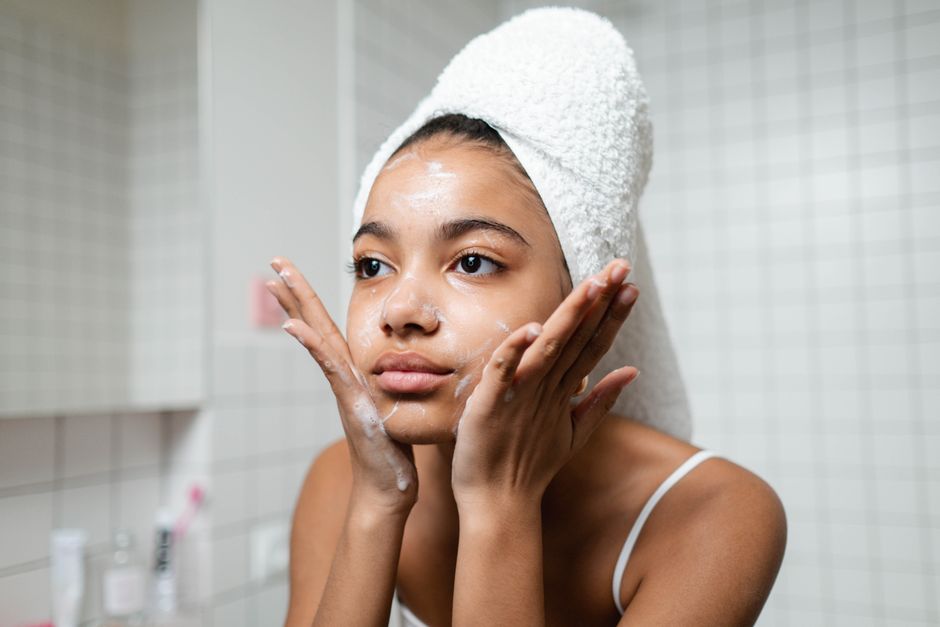
The most common and most damaging mistake in barrier repair is washing your face more than twice a day, or using foaming, alcohol-containing cleansers. These products rapidly remove the sebum layer and natural moisturizing factors (NMF) on skin's surface. The result is increased transepidermal water loss (TEWL) and further disruption of barrier function.
Another common mistake is the "the cleaner, the faster I'll heal" logic. On the contrary, for a damaged barrier, it's clinically recommended to limit morning cleansing to lukewarm water alone, and to use a balanced, non-foaming cleanser in the pH 4.5-5.5 range in the evening. Even high-pH soaps outside this range can slow barrier repair.
Mistake 2 — Choosing a Moisturizer Without Ceramide
Many moisturizers on the market make skin feel temporarily soft but lack the ingredients that rebuild barrier structure. For barrier repair to be lasting, a moisturizer needs to contain ceramide, cholesterol, and free fatty acids at physiological ratios.
Ceramides are the most critical building blocks in the lipid matrix. When barrier damage is involved, skin's own ceramide synthesis falls short, creating a necessity for external supplementation. Humectants like glycerin or hyaluronic acid have a moisturizing effect, but ceramide-free formulas aren't sufficient for the barrier's structural repair. Understanding cholesterol and cholesterol's role in the skin barrier is critical in this regard.
Why Does the Right Ceramide Ratio Matter?
Research shows that barrier repair happens fastest when the ceramide:cholesterol:free fatty acid ratio is roughly 1:1:1.Feingold, 2007 Formulas outside this ratio can moisturize skin, but they can't genuinely restore a damaged lipid matrix. CIRÈLL's Biomimetic TriBarrier System goes beyond the ordinary moisturizer concept by bringing these three components together at scientific ratios.
Mistake 3 — Continuing Active Ingredients Before the Barrier Is Repaired
The vast majority of retinol users become uncertain about whether to stop the product when peeling and redness begin on their skin. Yet while the barrier is still damaged, the relationship between retinol and the skin barrier is very delicate: retinol accelerates cell renewal while also potentially affecting the lipid synthesis needed for barrier renewal.Mukherjee et al., 2006
Similarly, the balance between AHA/BHA acids and the skin barrier is also often overlooked. Applying chemical exfoliants like glycolic acid or salicylic acid to an already-damaged barrier sets the stage for irritants to penetrate the skin more easily. Pausing these ingredients for at least 2-4 weeks during the barrier repair period is dermatologically recommended.
Mistake 4 — The "Everything at Once" Routine
Under social media's influence, multi-step, multi-active routines have become popular. But during a period of existing barrier damage, every new product becomes a potential source of irritation. When fragrance, high-concentration niacinamide, alcohol-based toners, and mechanical exfoliants are used at the same time, damage follows a cumulative course.
The principle that should be applied during this period is "fewer products, more effect." A minimal routine consisting only of a gentle cleanser, a ceramide-containing moisturizer, and a broad-spectrum sunscreen has been confirmed repeatedly in clinical studies as the protocol that delivers the fastest barrier repair.Vaughn et al., 2018
Mistake 5 — Skipping Sunscreen
Neglecting to use sunscreen during barrier repair is one of the biggest obstacles standing in the way of the repair process. UV radiation directly disrupts the lipid structure in the stratum corneum, accelerating ceramide breakdown.Pinnell, 2003 A damaged barrier is far more vulnerable to UV than healthy skin; this is why mineral-based sunscreens with SPF 30 and above should be an integral part of the barrier repair protocol.
The consequences of neglecting sunscreen aren't limited to sunburn alone. Over the long term, cumulative damage like hyperpigmentation, collagen breakdown, and chronic barrier weakening emerges. This effect is particularly pronounced in sensitive skin.
Mistake 6 — Overlooking Panthenol and Supporting Ingredients
Barrier repair isn't just about ceramide supplementation; supporting ingredients also play a major role. Panthenol is a pro-vitamin B5 derivative that supports keratinocyte proliferation and strengthens barrier integrity. Madecassoside, meanwhile, is a triterpene glycoside that speeds up wound healing and stimulates collagen synthesis, playing a key role in barrier repair.
Relying on formulas that lack these supporting ingredients extends the repair process. A multi-layered approach to barrier renewal — ceramide, cholesterol, free fatty acids, and supporting actives together — delivers the fastest and most lasting result.
Mistake 7 — Impatience and Constantly Switching Products
Barrier repair is a biological process and takes time. It takes the epidermis 28 to 40 days to completely renew itself; a damaged lipid matrix may need a renewal cycle well beyond this timeframe. Rapidly switching from product to product exceeds skin's adaptation capacity, multiplying irritation risk.
At least 4-6 weeks should be allowed to evaluate a barrier repair product's effectiveness. Within this period, dropping TEWL values, reduced flaking and tightness, and receding redness are the early signs of improvement. Understanding all the stages of the barrier repair protocol will help you set the right expectations during this process.
What Do These Signs Mean for You?
If you're experiencing one or more of the following signs, you may be facing damage caused by barrier repair mistakes. Each sign points to a different mechanism.
Tightness felt right after washing your face is a sign of rising TEWL and declining natural moisturizing factors (NMF). This feeling points to the barrier's water-holding capacity being seriously weakened.
A damaged barrier allows irritants and allergens to reach deeper layers. This triggers an inflammatory response, leading to redness and a burning sensation; over-cleansing or active ingredients accelerate this process.
In barrier damage, the orderly arrangement of corneocytes is disrupted, and the surface takes on an irregular appearance. Flaking is largely a direct result of ceramide deficiency and over-exfoliation.
If products you previously used without issue now sting and irritate, this shows the barrier can no longer perform its filtering function. This is the most critical warning sign of the barrier repair process.

Conclusion
Barrier repair mistakes largely begin with good intentions: the desire for cleaner skin, the search for stronger actives, and the expectation of fast results. But science says the exact opposite — barrier repair is a delicate process that requires patience, minimalism, and the right ingredient choices. Over-cleansing, ceramide-free moisturizer, using actives during a damage period, and impatient product switching form the four major obstacles standing in the way of this process.
To avoid these mistakes and put the repair process on a scientific foundation, CIRÈLL's Biomimetic TriBarrier System is designed to support skin's own repair mechanisms in the most direct way, by delivering ceramide, cholesterol, and free fatty acids at physiological ratios.

Mistake 8 — Failing to Show Patience and Consistency
Repairing the skin barrier isn't a quick cosmetic fix; it's a long-term healing process at the cellular level. Complete renewal of the stratum corneum (the skin barrier's outermost layer) takes 28-40 days. Many people expect results within 1-2 weeks and, thinking they've failed, abandon their routine. But during this period, skin is in an active healing phase. Scientific research shows that a ceramide and hyaluronic acid combination, used regularly for a minimum of 4 weeks, can deliver up to 30% improvement in skin barrier function. Giving up early means losing out on this improvement potential.
Inconsistency isn't limited to product use alone. Many people start a barrier repair routine but keep skipping application on weekends, during stressful periods, or while traveling. The skin barrier is quite sensitive to these kinds of interruptions; even on the days you pause, improvement can move backward. Ideally, you should use your chosen moisturizer and supporting products under all circumstances, at the same time every day. Think of it like a medication regimen: changing its dose and frequency directly affects treatment effectiveness. It's also important to resist the urge to switch products. You shouldn't switch out a moisturizer you've used for only 3 weeks just because mild itching or redness from the first weeks continues; this is actually a normal finding during the barrier's healing period.
Success in barrier repair is achieved through discipline and patience. 85% of people who complete the first 4-6 weeks without difficulty report noticeable improvement at 8-12 weeks. Dermatologists' recommendation is clear: keep your routine consistent, track progress with weekly photos, and show patience for at least 6 weeks. When results arrive, you'll be rewarded for staying consistent.
Frequently Asked Questions
What are barrier repair mistakes?
The most common barrier repair mistakes include: excessive or aggressive face washing, using a moisturizer without ceramide, continuing retinol and high-concentration acids while the barrier is damaged, applying too many active ingredients at once, skipping sunscreen, and rushing to switch products. Each of these mistakes can disrupt skin's repair cycle, deepening the damage.
How long does barrier repair take?
Mild barrier damage can heal in 1-2 weeks with the right care protocol, while chronic or deep damage can take 4-8 weeks. Since the epidermis's full renewal cycle is roughly 28-40 days, waiting at least 4 weeks is recommended to evaluate genuine improvement. Patience during the repair process is far more valuable than the urge to switch products.
Can the barrier be repaired without ceramide?
In theory, the body can synthesize its own ceramide; but this process falls short in cases of serious barrier damage. Clinical research shows that formulas containing ceramide, cholesterol, and free fatty acids at physiological ratios restore the barrier fastest. Humectants alone (glycerin, hyaluronic acid) moisturize skin but don't repair the structural lipid matrix; this is why ceramide is considered essential for barrier repair.
Can retinol be used while the barrier is damaged?
Pausing retinol use while barrier damage is active is recommended. Retinol, by accelerating cell turnover, can add extra load to an already-stressed barrier and make the irritation cycle impossible to break. Once barrier repair signs (tightness, redness, burning) pass, the safest approach is to gradually return to retinol, starting at a low concentration.
Do AHA and BHA prevent barrier repair?
During a period of barrier damage, high-concentration chemical exfoliants (glycolic acid, salicylic acid, etc.) further weaken the barrier's protective function, making it easier for irritants to penetrate deeper layers. This is why pausing acid-containing products for at least 2-4 weeks during barrier repair is the approach recommended in dermatology literature. A mild PHA can be better tolerated, but caution should still be exercised.
How many times a day washing your face damages the barrier?
Washing your face more than twice a day, especially with foaming or high-pH cleansers, rapidly removes skin's sebum and natural moisturizing factors (NMF) and raises TEWL. During a period of barrier damage, rinsing with lukewarm water alone in the morning instead of washing, and using a gentle, pH-balanced cleanser in the evening, is recommended.
Are barrier repair mistakes more dangerous for sensitive skin?
Yes. In sensitive and reactive skin, the barrier may already be structurally more permeable; this is why the same mistakes lead to more severe reactions. Redness, burning, and excessive sensitivity to products develop much faster in sensitive skin. For this skin type, minimal-ingredient, ceramide-rich, fragrance-free formulas are critically important.
Which ingredients should be prioritized in barrier repair?
Formulas containing ceramide (especially ceramide NP, AP, and EOP), cholesterol, free fatty acids (linoleic acid, palmitic acid), panthenol, and madecassoside should be prioritized. These ingredients simultaneously provide structural repair of the lipid matrix and supportive healing processes. Fragrance, alcohol, and high-concentration actives should be avoided during this period.
What can I do to speed up barrier repair?
Reduce your routine to a minimum: apply a three-step protocol consisting of a gentle cleanser, a ceramide-containing moisturizer, and an SPF sunscreen. Pause active ingredients, use lukewarm water instead of hot, and dry skin by gently patting rather than rubbing with a towel. Supporting ingredients like panthenol, madecassoside, and ectoin can also speed up healing. Most importantly, resist the urge to switch products, and give your chosen products at least 4 weeks.
The CIRÈLL Perspective: A Formulation That Rebuilds Barrier Structure
CIRÈLL's Biomimetic TriBarrier™ system mimics the stratum corneum's natural lipid composition, delivering ceramide, cholesterol, and free fatty acids at physiological ratios. Structural repair happens not just on the surface, but at the lamellar level.

Mine Ekber
CIRÈLL Formulation & Content Team
A content editor working alongside CIRÈLL's R&D team on skin barrier physiology topics. The scientific claims on this page are based on peer-reviewed sources verified via PubMed/NCBI; the source list is below.
Scientific Sources
- Elias PM. The skin barrier as an innate immune element. Semin Immunopathol, 2007.
- Feingold KR. Thematic review series: skin lipids. The role of epidermal lipids in cutaneous permeability barrier homeostasis. J Lipid Res, 2007.
- Mukherjee S, Date A, Patravale V, et al. Retinoids in the treatment of skin aging: an overview of clinical efficacy and safety. Clin Interv Aging, 2006.
- Vaughn AR, Clark AK, Sivamani RK, Shi VY. Natural Oils for Skin-Barrier Repair: Ancient Compounds Now Backed by Modern Science. Am J Clin Dermatol, 2018.
Related Articles
Related Guides
CIRÈLL Barrier Repair Cream
The scientific skin barrier principles discussed in this article form the foundation of the CIRÈLL Biomimetic Tribarrier Cream formulation.
View the Product