

Serum Combining: Which Serums Should Never Be Used Together?
Key Facts
- Vitamin C (L-ascorbic acid) works at 10-20% concentrations within pH 2.5-3.5; applying it alongside niacinamide has been reported to carry a risk of conversion to nicotinic acid and facial flushing
- When retinol and AHA/BHA acids are used simultaneously, transepidermal water loss (TEWL) rises measurably within 48 hours; the barrier's tight junction proteins are disrupted
- Benzoyl peroxide oxidizes retinol and renders the molecule inactive when applied at the same time; clinical studies show effectiveness drops by 60-80%
- The CIRÈLL Biomimetic TriBarrier System combines ceramides, cholesterol, and free fatty acids in a 1:1:1 molar ratio, buffering active ingredients' destructive effect on the barrier and supporting repair
- Correct layering order — thinnest consistency to heaviest, lowest pH to highest — can boost active-ingredient effectiveness by 30-50%
Let's build a skincare protocol tailored to you.
Our expert team prepares a personalized routine recommendation based on your skin type.
Free Consultation LinePharm. Mine Ekber
The Foundation of Serum Combining: pH, Molecular Structure, and Barrier Chemistry
To understand serum combining, you first need to understand why active ingredients are so dependent on pH. The stratum corneum's natural pH sits between 4.5-5.5, and this acidic environment protects both antimicrobial defense and the lipid lamellar structure. When a serum disrupts that balance, it can set off a domino effect across the entire routine.
pH Windows and Active Ingredient Compatibility
Every active ingredient has a pH window where it works. L-ascorbic acid reaches peak penetration at pH 2.5-3.5, while niacinamide stays most stable between pH 5-7. Applying both at once exposes skin to a pH conflict, disrupting the biochemical pathway each one targets. Similarly, AHA (glycolic acid, lactic acid) and BHA (salicylic acid) compounds penetrate keratinocytes at pH 3-4, and this same acidic environment accelerates the surface inactivation of retinoids.
Molecular Weight and the Penetration Hierarchy
Molecular weight is the scientific basis for layering order. High-molecular-weight substances like hyaluronic acid (1,000-1,800 kDa) sit on the stratum corneum surface and hold water there, while low-molecular-weight acids (under 50 kDa) penetrate deeper layers. Applying a high-weight moisturizer first can physically block the penetration of the active ingredient that follows. The correct sequence — thin liquid to thick consistency, small molecule to large — prevents this conflict.
Serum Combinations That Should Never Be Used Together
The combinations below are clinically problematic pairings documented repeatedly in the dermatology literature. Here's each one, with its mechanism.
1. Retinol + AHA/BHA Acids
Retinol and hydroxy acids are two of the most powerful active categories in skincare — but combined in the same application, they create breakdown, not synergy. The low pH of AHA/BHA suppresses the activity of retinol dehydrogenase, the enzyme responsible for converting retinol to retinoic acid. At the same time, acid-driven exfoliation thins the upper layers of the stratum corneum and exposes freshly revealed keratinocytes directly to retinol's irritant effect. The result: maximum irritation, minimum effectiveness. Keep retinol on one night and AHA/BHA on a different night — or during the day. Our guide on AHA BHA and the skin barrier covers this relationship in depth.
2. Vitamin C (L-Ascorbic Acid) + Niacinamide
This combination has long been debated. The theoretical risk: under high heat or prolonged contact, L-ascorbic acid and niacinamide can react to form nicotinic acid and ascorbate, and nicotinic acid triggers facial flushing. However, some studies argue this risk is low in modern formulations. Practical recommendation: the safest approach is vitamin C in the morning and niacinamide in the evening, or leaving at least a 30-minute gap between the two.
3. Retinol + Benzoyl Peroxide
Benzoyl peroxide is a powerful oxidizing agent. Retinol is a molecule extremely sensitive to oxidation. When the two come into contact, benzoyl peroxide oxidizes retinol and largely destroys its biological activity — making simultaneous use both expensive and pointless. For acne-prone skin, a split routine — benzoyl peroxide during the day, retinol at night — is the better choice.
4. Multiple Acid Serums at Once
Layering multiple acids — glycolic acid + salicylic acid + mandelic acid, for example — over-dissolves the stratum corneum's lipid lamellar structure. Using more than one exfoliating acid in a single session dramatically increases TEWL, and if that transepidermal water loss becomes chronic, barrier repair can take weeks. Rotating a single acid 2-3 times a week is always superior to applying multiple acids simultaneously.
5. Vitamin C + Retinol (in the Same Session)
Both are powerful antioxidants and anti-aging actives, but their different pH windows mean that applying them at the same time disrupts one or the other's working environment. Vitamin C needs pH 2.5-3.5, while retinol stays more stable near neutral pH. Standard recommendation: vitamin C in the morning (for antioxidant protection and UV synergy), retinol at night.
| Combination | Risk | Mechanism | Recommendation |
|---|---|---|---|
| Retinol + AHA/BHA | High irritation, low effectiveness | Acidic pH suppresses the retinol-conversion enzyme | Separate onto different nights |
| Vitamin C + Niacinamide | Nicotinic acid formation, flushing | Chemical conversion risk (at high heat) | Morning/evening or 30-min gap |
| Retinol + Benzoyl Peroxide | Retinol inactivation | Oxidative breakdown | BP by day, retinol at night |
| Multiple Acid Serums | Excess barrier breakdown, rising TEWL | Lipid lamellar structure dissolves | One acid, 2-3x weekly |
| Vitamin C + Retinol | pH conflict, mutual inactivation | Different pH requirements | Vitamin C AM, retinol PM |
| AHA + Peptide Serums | Peptide hydrolysis | Peptide bonds break down in an acidic environment | Acid first, peptide 20 min later |
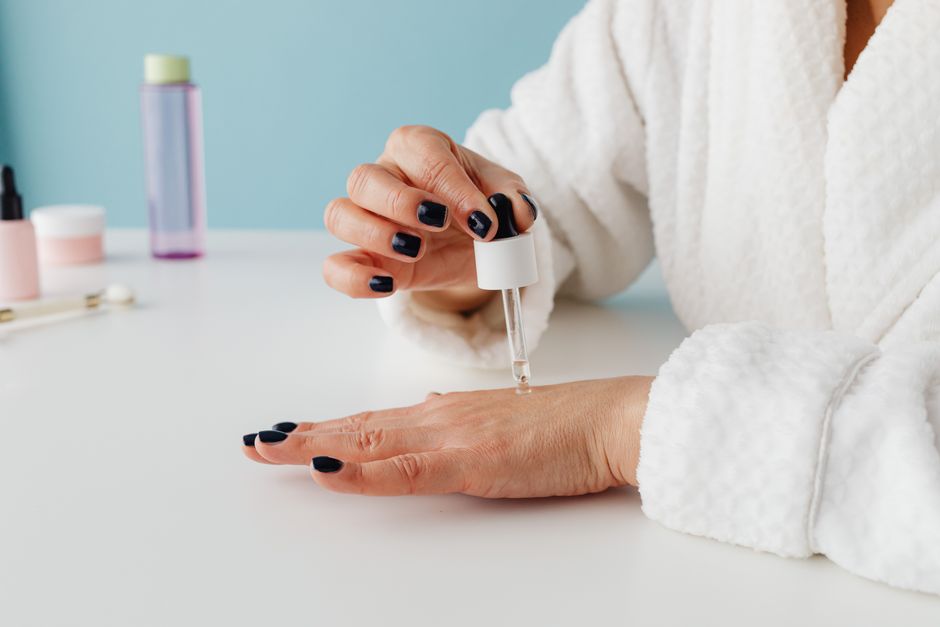
Combinations That Need Careful Handling: Low Risk, High Caution
Some combinations fall less into strict prohibition and more into a category requiring careful dosing and application timing. Rather than rejecting these combinations outright, it's possible to manage them with the right protocol.
Niacinamide + AHA/BHA
Niacinamide is valuable for barrier repair and pore-size reduction; AHA/BHA is used for exfoliation. Applying both at once can reduce some of niacinamide's anti-inflammatory effects in an acidic environment. Recommendation: apply the AHA/BHA serum first, wait 15-20 minutes, then move to the niacinamide serum. That gap allows for adequate absorption.
Peptide Serums + Acid Ingredients
Peptides are small protein fragments made of specific amino acid sequences. In an acidic environment, peptide bonds can hydrolyze and lose their targeted biological activity. Apply the acidic serum first, wait until the skin's pH stabilizes (roughly 20 minutes), and then layer the peptide serum. Our barrier repair guide has a detailed protocol for how to structure peptide-based routines.
Retinol + Vitamin C (at Low Concentrations)
Low-concentration (under 5%) stable vitamin C derivatives — like ascorbyl glucoside and sodium ascorbyl phosphate — show a more tolerable interaction when used at the same time as retinol. These derivatives are less pH-dependent, and some have even been reported to have potential to protect retinol against oxidative damage. The L-ascorbic acid + retinol combination doesn't show this same tolerance.
Bakuchiol + Retinol
Plant-derived bakuchiol is often called "botanical retinol" because it shows a gene-expression profile similar to retinol. Combining the two could theoretically lead to excess retinoid stimulation, though clinical irritation data remains limited. For sensitive skin, bakuchiol alone may provide sufficient effectiveness.
The Correct Serum Order: A Step-by-Step Layering Protocol
Serum order is the practical application that lets active ingredients work with maximum effectiveness and minimum irritation. The step lists below are designed separately for morning and evening routines.
Morning Routine: The Correct Serum Order
Evening Routine: The Correct Serum Order
The CIRÈLL Biomimetic TriBarrier System and Active Serum Routines
Powerful active serum combinations inevitably strain the stratum corneum's lipid balance. This is where CIRÈLL's formulation philosophy comes in: protecting the barrier is as much a part of treatment as targeting the active.
Barrier Repair's Role in a Serum Routine
The stratum corneum's lipid matrix is made up of ceramides (50%), cholesterol (25%), and free fatty acids (15-20%). When these ratios are disrupted — which excessive active-ingredient use frequently triggers — barrier permeability increases, external irritants reach the dermis, and the inflammatory cascade begins. The CIRÈLL Biomimetic TriBarrier System brings these three lipids together in a ratio close to their physiological proportions, rebuilding both barrier repair and an environment where active ingredients can remain stable.
Which Actives Need Barrier-Friendly Formulation Support?
Retinol, high-concentration vitamin C, and AHA/BHA acids — the actives that place the greatest load on the barrier — should all be supported with a ceramide-containing finishing moisturizer. This approach is also known as the "sandwich technique": active first, moisturizer immediately after. For sensitive skin, this becomes even more important. Similarly, our guide covering the retinol and skin barrier relationship in detail is a foundational resource for anyone looking to structure their retinol routine correctly.
Ectoin and Madecassoside: Buffer Ingredients for Active Serum Routines
Ectoin, derived from microorganisms adapted to extreme environmental conditions, is an amino-acid derivative that protects cell membranes against osmotic stress. Ectoin-containing products applied after active serum combinations meaningfully reduce irritation risk. Madecassoside, a triterpene glycoside isolated from the Centella asiatica plant, is a core active in CICA barrier formulations; it stimulates collagen synthesis and suppresses inflammatory cytokines. Both ingredients offer practical support for speeding up recovery after powerful active serum routines.
Serum Combining Strategy by Skin Type and Condition
There's no universal rule for serum combining; the right pairing depends on skin type, age, season, and existing skin concerns.
Oily and Acne-Prone Skin
For this skin type, a niacinamide + salicylic acid combination is safe and effective; niacinamide regulates sebum while BHA clears pores, and both work well together within a similar pH range. If benzoyl peroxide is being used, though, it must always be kept separate from retinol. Even though oily skin tolerates more actives, avoid the trap of assuming "more actives = better results."
Dry and Dehydrated Skin
Aggressive AHA concentrations combined with retinol are especially risky for dry skin, drying out skin that already has elevated TEWL even further. Priority should go to supportive serums containing ceramide, panthenol, and hyaluronic acid; actives should be introduced gradually, starting at low concentrations. Dehydrated skin illustrates, mechanism by mechanism, why actives shouldn't be started before the moisture-barrier balance is restored.
Sensitive and Reactive Skin
For skin with chronic inflammatory conditions like rosacea, atopic dermatitis, or eczema, strong active combinations should only be attempted under expert supervision. Barrier repair should take priority first for this skin type, with actives added only after the barrier has stabilized and starting from the lowest concentration. In the presence of rosacea, strong AHAs and high-concentration retinol require especially careful evaluation.
Mature and Photoaged Skin
In skin over 40, ceramide synthesis declines, barrier repair capacity drops, and sensitivity to active ingredients increases. Retinol remains the most well-evidenced anti-aging active for this age group, but it should follow a slow-start protocol (one night a week, gradual increase) and always be paired with a ceramide-containing moisturizer.Mukherjee et al., 2006
Seasonal Adjustments
In winter, low humidity and the drying effect of heating systems raise TEWL; during this period, AHA/BHA frequency should be reduced and barrier-supporting ingredients should take priority. In summer, high heat negatively affects vitamin C serum stability, so refrigerated storage and opaque packaging are preferable. Retinol users shouldn't neglect reducing frequency and using complete SPF coverage during summer months.
What Do These Signs on Your Skin Mean?
A mismatched serum combination sometimes shows itself instantly, and sometimes over days, through clear symptoms; recognizing these signals helps you revise your routine at the right time.
Intense burning and redness felt during or immediately after application signals a pH conflict or the simultaneous application of more than one irritant active. The stratum corneum may have entered neuroimmune activation; stop all actives and switch to a barrier-focused routine.
Peeling and flaking beyond the expected renewal exfoliation points to excess acid or retinol buildup dissolving barrier lipids. TEWL has risen, and acid/retinol use should stop until the moisture barrier is rebuilt.
Chronic tightness felt after cleansing or throughout the day shows that the stratum corneum's moisture capacity has dropped and the barrier has become permeable. If this symptom appears specifically after an AHA + retinol combination, the routine should be reviewed immediately.
A rise in surface temperature and mild swelling signal that an active-ingredient-driven inflammatory cascade has begun. Benzoyl peroxide or a high-concentration acid combination is the group most often responsible for this reaction; apply a cold compress and a thick moisturizer, and seek a dermatologist's opinion.

Conclusion
Serum-combining knowledge is one of the most decisive — and most often overlooked — dimensions of a skincare routine. Correct pairing, correct sequencing, and correct frequency shape the outcome just as much as choosing the right active ingredients. Understanding these three mechanisms — pH incompatibility, molecular inactivation, and barrier overload — is the foundation for getting maximum benefit out of expensive serums.
The skin barrier should be viewed as more than just a permeability wall — it's the biological platform every active ingredient works on. That's why CIRÈLL's approach is this: stabilize the barrier before targeting an active, protect the barrier while using an active, repair the barrier after using an active. The CIRÈLL Biomimetic TriBarrier System was designed specifically to support this cycle. To evaluate your own routine and get a personalized recommendation, reach our expert team through the WhatsApp line below.

Frequently Asked Questions
What is serum combining, and why does it matter?
Serum combining refers to using more than one active-ingredient serum together or in sequence within the same skincare routine. It matters because different active ingredients work within different pH ranges, and can either boost or completely inactivate each other's effect. Mismatched combinations can damage the skin barrier, causing irritation, redness, and chronic moisture loss. A correct combination, on the other hand, lets each active's targeted biological pathway run uninterrupted, creating a synergistic effect and improving skin health over the long term.
Why shouldn't retinol and AHA acids be used together?
Applying retinol and AHA (alpha hydroxy acid) compounds at the same time causes problems through two core mechanisms. First, AHA's low pH (3-4) suppresses the activity of retinol dehydrogenase, the enzyme responsible for converting retinol to retinoic acid, rendering the retinol ineffective. Second, AHA-driven exfoliation thins the upper layers of the stratum corneum and directly exposes newly revealed keratinocytes to retinol's irritant effect. The result is redness, peeling, and long-term barrier damage — which is why retinol should go on one night, and AHA on a different night (or during the day).
At what percentage is vitamin C serum effective, and what pH does it need?
Vitamin C in the form of L-ascorbic acid shows clinically meaningful antioxidant, anti-pigmentation, and collagen-synthesis-stimulating effects at 10-20% concentrations. For this form to be effective, it must be formulated between pH 2.5-3.5; above pH 4, penetration drops sharply and bioavailability falls. Stable vitamin C derivatives (ascorbyl glucoside, sodium ascorbyl phosphate) stay stable at higher pH but act more slowly due to the conversion step required inside the skin. Concentrations above 20% provide no additional effectiveness — only a higher irritation risk.
Which serums can niacinamide be used with?
Niacinamide is a versatile active that works within pH 5-7 and is compatible with many ingredients. It combines safely with hyaluronic acid, pairs well with peptide serums, strengthens sebum regulation when used with zinc, and provides a synergistic barrier-support effect with ceramide-containing moisturizers. Niacinamide can also be combined with retinoids as long as different time windows are preserved — for example, retinol at night and niacinamide in the morning or at a different step. With vitamin C (L-ascorbic acid), it's recommended to leave at least a 30-minute gap or use them at different times of day.
What should the correct serum application order be?
The general rule for serum application order is: layer from thinnest consistency to thickest, and from lowest pH to highest. A typical morning order looks like this: cleanser → toner → vitamin C serum → niacinamide (with a 30-min gap) → hyaluronic acid serum → moisturizer → SPF. Evening order: double cleanse → acid toner or AHA/BHA serum (2-3x weekly, 15-20 min wait) → peptide serum → hyaluronic acid → retinol (on nights without acid) → ceramide-containing moisturizer. Waiting 1-3 minutes between each step improves absorption.
What ingredients shouldn't benzoyl peroxide be combined with?
Because benzoyl peroxide is a powerful oxidizing agent, it conflicts with any active ingredient sensitive to oxidation. The most critical combination to avoid is with retinol: benzoyl peroxide oxidizes the retinol molecule and reduces its biological activity by 60-80%. Simultaneous use with vitamin C (L-ascorbic acid) isn't recommended either — both create oxidative stress, and one can neutralize the other. When benzoyl peroxide is used during the day or morning and retinol at night, both actives retain their full potential.
What's the safest serum combination for oily and acne-prone skin?
For oily and acne-prone skin, the safest and best-documented combination is niacinamide + salicylic acid. Niacinamide (2-5%) regulates sebum production, reduces the appearance of pores, and targets post-acne marks; salicylic acid (0.5-2%) penetrates into pores due to its lipophilic structure and dissolves keratin plugs. The two work compatibly within a similar pH range with minimal irritation. If benzoyl peroxide needs to be added, it should be separated — benzoyl peroxide in the morning, niacinamide + salicylic acid in the evening. Retinol can also be added to this routine, but should be kept separate from acid application.
How should serum combining differ for skin over 40?
In skin over 40, ceramide synthesis drops by roughly 30-40%, filaggrin expression declines, and barrier repair capacity slows. As a result, sensitivity to active ingredients increases and the irritation threshold drops. Retinol remains the most well-evidenced anti-aging active for this demographic, but the starting concentration should be kept very low (0.025-0.05%) and introduced with just 1-2 nights a week. AHA/BHA frequency should be limited to 1-2 times a week, and a ceramide- and cholesterol-containing moisturizer should always follow every serum application. Peptide serums and growth factors can be added as synergistic support for this age group.
Should serum routines change in winter?
Yes, routine adjustment is necessary in winter. Low humidity (30-40% indoor humidity) and the drying effect of heating systems raise TEWL and reduce stratum corneum lipid content. During this period, AHA/BHA exfoliation frequency should drop to 1-2 times a week, and retinol concentration or frequency should be reduced if needed. Moisturizers containing ceramide, cholesterol, and fatty acids should become the focus of the routine. Hyaluronic acid serums should be applied to damp skin and sealed with a moisturizer; otherwise, in a low-humidity environment, they risk drawing moisture out of the skin instead of in.
Can serum combining mistakes leave permanent skin damage?
Most serum combining mistakes create temporary barrier damage that heals within 1-4 weeks with proper care. However, chronic and repeated mismatched combinations — especially ongoing simultaneous use of retinol + AHA — can lay the groundwork for long-term barrier dysfunction, chronic sensitization, and reactive skin. Recurring irritation caused by benzoyl peroxide can also lead to post-inflammatory hyperpigmentation (PIH), which can last for months. If acute reaction signs appear (severe burning, swelling, blisters), all actives should be stopped immediately and a dermatologist consulted.
What should you do once side effects start?
When irritation, redness, burning, or excessive peeling begins after a serum combination, here are the steps to take: (1) Temporarily stop all active ingredients. (2) Use only a gentle, pH-balanced cleanser, a generous hyaluronic acid serum, and a ceramide-containing moisturizer. (3) A cold compress can be applied to reduce heat and inflammation. (4) Keep using sunscreen, since a damaged barrier is more sensitive to UV. (5) If symptoms don't resolve within 72 hours, or if serious symptoms like swelling and blisters appear, see a dermatologist. Once the barrier stabilizes, actives should be reintroduced one at a time, starting from the lowest concentration, and the routine rebuilt gradually.
Which actives do peptide serums work with, and which do they not work with?
Peptide serums work best with hyaluronic acid, niacinamide, and ceramide-containing moisturizers; these combinations support peptide activity and barrier repair. By contrast, peptides applied directly into an acidic environment (immediately after AHA, BHA, or high-concentration vitamin C) can undergo peptide-bond hydrolysis due to the low pH and lose their effectiveness. That's why you should wait at least 15-20 minutes after applying an acid serum, letting the skin's pH stabilize, before moving on to a peptide serum. Benzoyl peroxide, due to its oxidizing nature, also shouldn't be used at the same time as peptide serums.
Can serum combining continue while the skin barrier is damaged?
No; continuing active-ingredient serum combinations while the skin barrier is damaged deepens the damage. Signs of barrier dysfunction include chronic tightness, flaking, redness, heightened sensitivity, and a burning sensation with every product. In this state, the barrier needs to be repaired first: stop all actives, and use only formulations containing ceramide, cholesterol, and fatty acids, along with panthenol and gentle lukewarm-water cleansing. The repair process typically takes 2-4 weeks. Once the barrier stabilizes, actives should be reintroduced very gradually, one at a time.
Does combining cheap and expensive serums cause problems?
Price difference on its own doesn't create a chemical interaction or incompatibility; the problem always comes from ingredient and pH compatibility. Simultaneous use of a cheap AHA serum and an expensive retinol serum causes the same damage as combining two expensive products incorrectly. The real question to ask is: do these two products' active ingredients create a pH conflict? Does one disrupt the other's chemical stability? Is the application order and wait time correct? Once those questions are answered correctly, price difference doesn't determine the outcome.
When do the results of serum combining start to show?
The results of a correct serum combination vary depending on the target concern and the active used. Improvements in moisture balance and reduced tightness can be felt within 3-7 days. Visible improvement in pore appearance requires 4-8 weeks. Reduction in hyperpigmentation and marks requires at least 8-12 weeks of consistent use. Retinol's anti-aging effects (reduced fine lines, improved skin texture) become measurable after 3-6 months. If a mismatched combination is being used, none of these processes work properly — irritation and barrier damage can make existing concerns worse. That's why building the correct combination is the prerequisite for each active to be able to fulfill its own effectiveness timeline.
Are AI tools or online sources reliable for serum combining?
AI tools and online sources can offer a useful starting point for general information, but they can't assess individual skin conditions, the specific formulations of the products you're actually using, or your personal health history. Serum combining decisions should be personalized to skin type, current barrier condition, medications in use, and seasonal factors. That's why the most accurate approach for a comprehensive routine change is to consult a dermatologist or dermocosmetic specialist, treating AI recommendations as a general framework to be confirmed with expert opinion.

Mine Ekber
CIRÈLL Formulation & Content Team
Content editor working alongside the CIRÈLL R&D team on skin barrier physiology topics. The scientific claims on this page are verified against peer-reviewed sources via PubMed/NCBI; the source list is below.
Scientific Sources
- Mukherjee S, Date A, Patravale V, Korting HC, Roeder A, Weindl G. Retinoids in the treatment of skin aging: an overview of clinical efficacy and safety. Clin Interv Aging. 2006;1(4):327-348.
Full niacinamide guide: Niacinamide Guide →
Related Blog Posts
Related Guides
CIRÈLL Barrier Repair Cream
The scientific skin barrier principles discussed in this article form the foundation of the CIRÈLL Biomimetic Tribarrier Cream formulation.
View the Product